How to use Kobiton with XebiaLabs?

Reading Time : 3 min read
Kobiton and XebiaLabs integration

XebiaLabs

XebiaLabs is an independent software company specializing in DevOps and continuous delivery for large enterprise organizations. XebiaLabs offers the XebiaLabs DevOps Platform, a solution for Application Release Automation.

Kobiton

Kobiton integrates real-device mobile testing into your DevOps process, with support for over 350 mobile devices and the ability to connect to local on-premises devices. The Kobiton integration for XebiaLabs allows you to plan, automate, and optimize mobile device testing as part of your release pipelines.

The Kobiton integration for XebiaLabs can:
  • List available devices for automated tests
  • Install applications on a device
  • Executed automated tests using Appium

Configure Kobiton on XebiaLabs

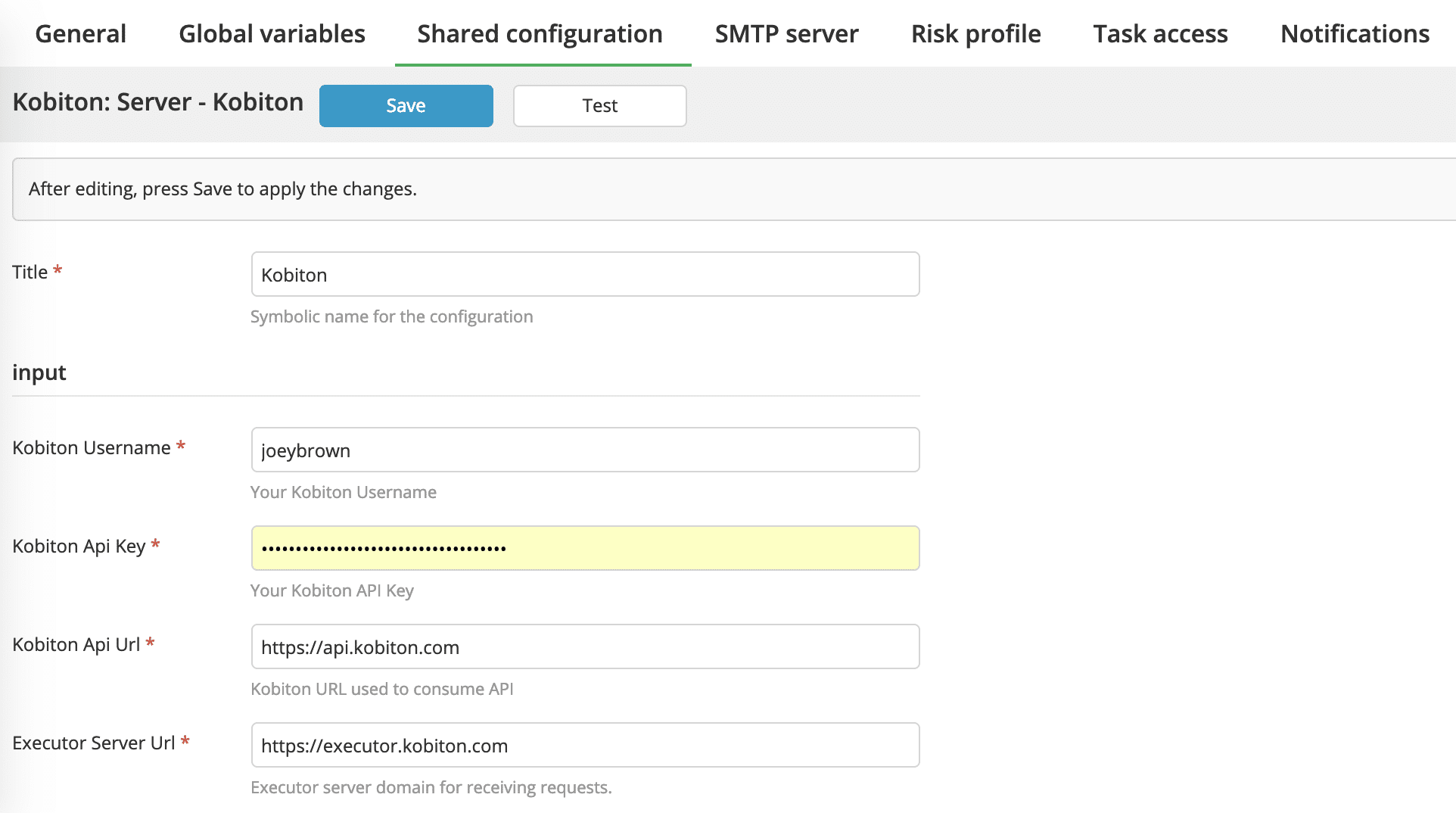
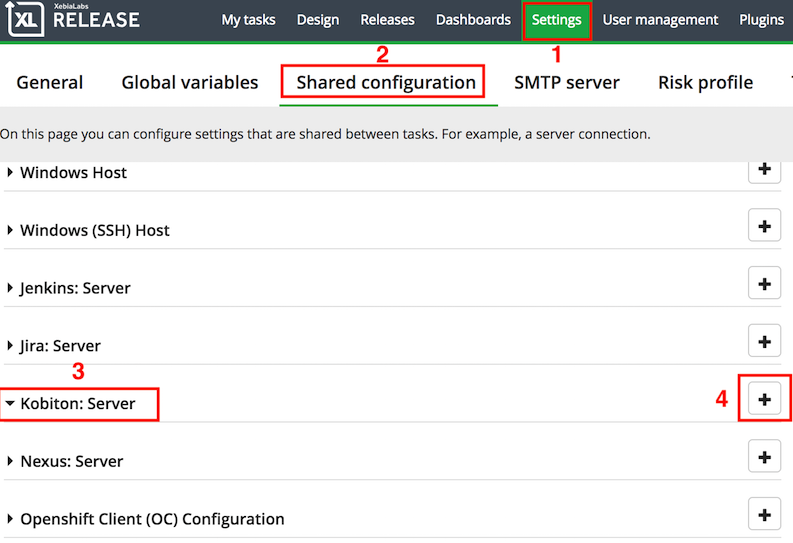
  1. In the XL Release home page, go to Settings > Shared configuration > Kobiton: Server > XL Release Settings page showing the Shared Configuration section. The Kobiton Server option is highlighted, with a plus button indicating where users can add a new Kobiton server connection.Screenshot displaying the identification of Kobiton server shared configuration settings.
  2. Fill all information to identify Kobiton server

Create Release

  • Select Release menu
  • Click New release button
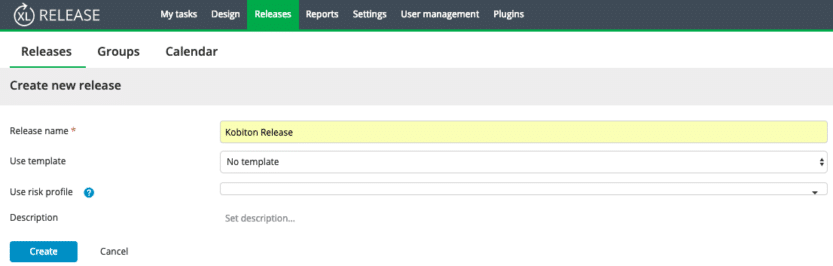
  • Enter Release name

    XL Release create release screen showing a form for entering a release name, selecting a template, choosing a risk profile, and adding a description before creating a new release.
  • Click Create button

Create Phase

Kobiton Plugin now supports 3 tasks on XL Release environment. We will define a list of tasks on the Phase widget. They are:
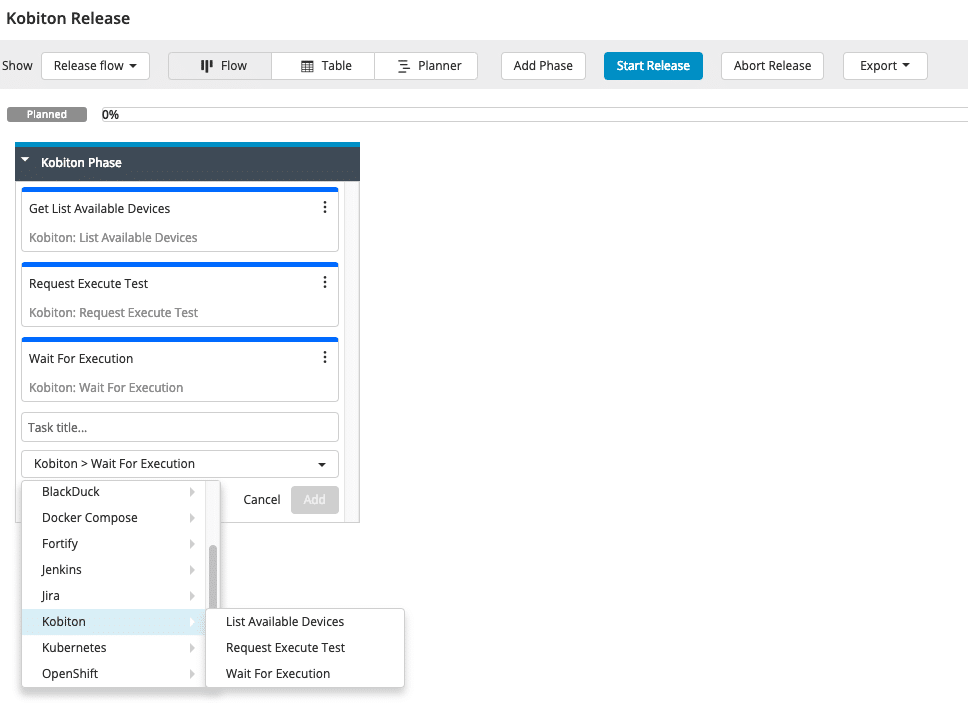
  • List Available Devices
  • Request Execute Test
  • Wait For Execution
    Creating phases in a project or process, emphasizing stages of development.

1. List Available Devices

This task will help to fetch all online devices that you can use for your automation scripts. It contains multiple properties to filter online devices that depend on your expectations. You can run your automation test with Kobiton Cloud devices or your In-house devices or your mixed-up devices in Favorite devices group.
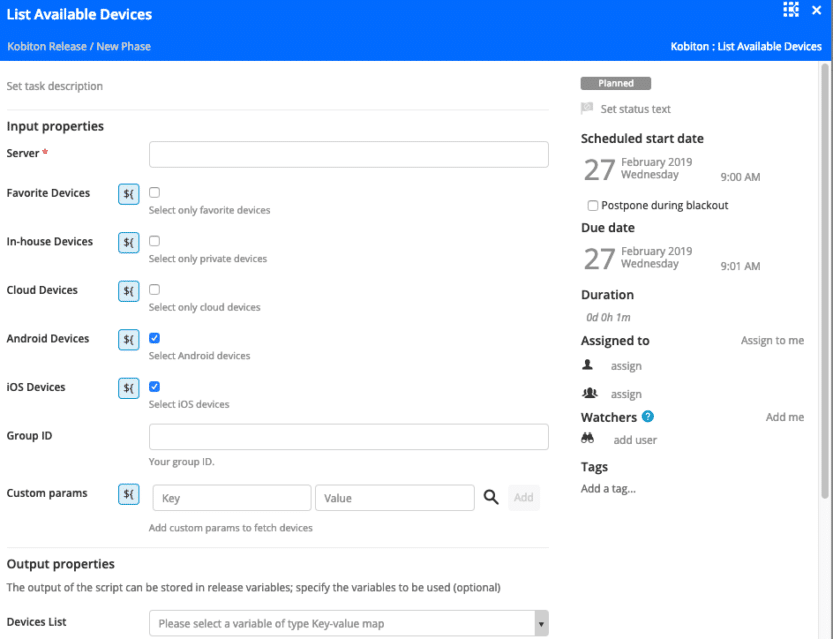
List of available devices displayed on the screen for user selection.

In addition, you can add more Custom params such as deviceName, platformVersion, UDID, etc… We can store the results into the defined global variables. This variable will be reused on other tasks.
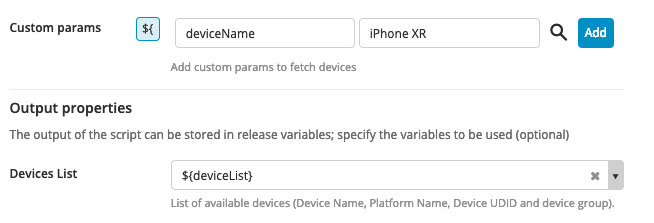
Configuration panel showing custom device parameters and output properties, with an iPhone XR device filter and a device list variable for automated test execution.

2. Request Execute Test

We will use this task to execute the automation test with Kobiton server.
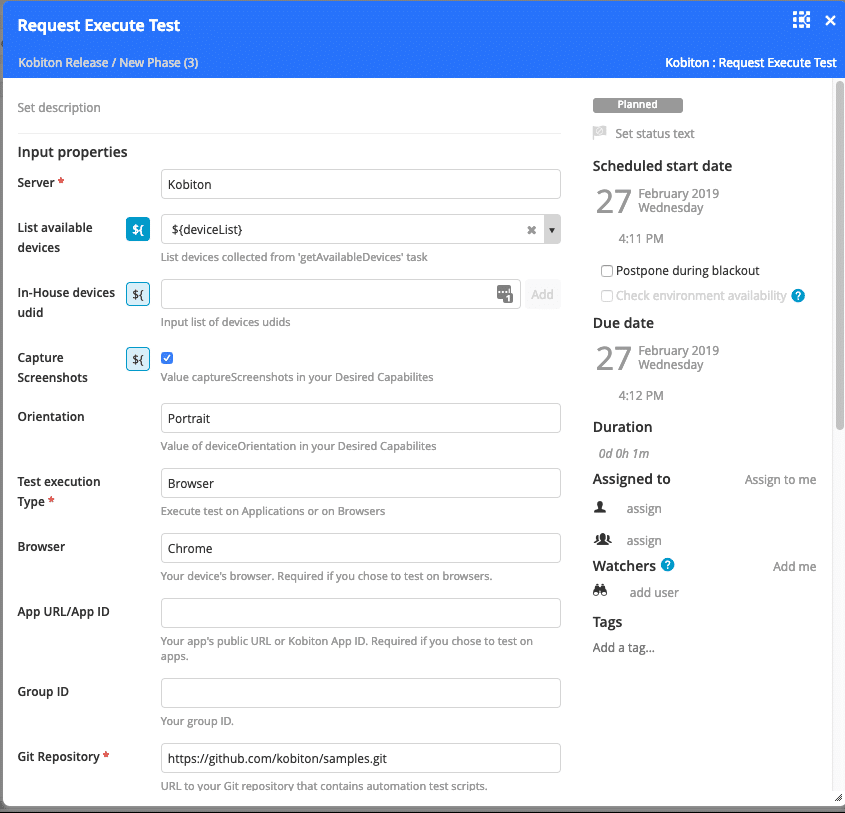
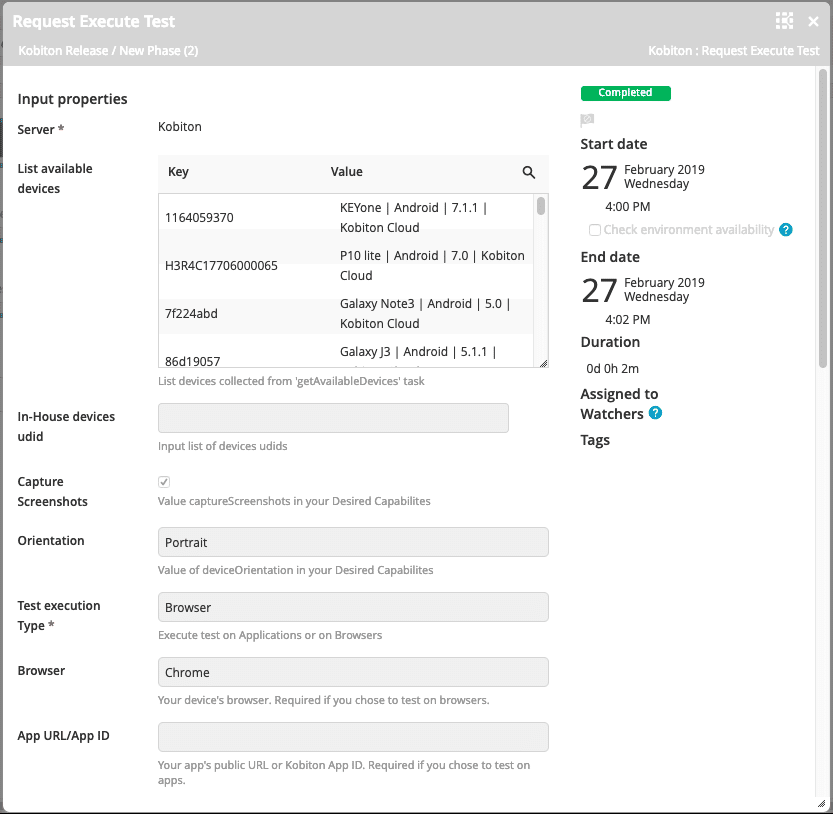
XL Release test execution request form configured for Kobiton, showing device selection, screenshot settings, browser testing options, Git repository details, and scheduled execution information.
  • Select Server = Kobiton
  • Click the button  to select the global variable deviceList in the List available devices
  • Select Test Execution Type = Browser
  • Enter Git Repository = https://github.com/kobiton/samples.git and choose the default Execute branch = master
  • Enter Configuration Commands, please copy exactly the snippet code below:

commands:

– cd javascript

– npm install

– npm run android-web-test

  • Click the button  to create the global variable jobId
  • Then click Start Release

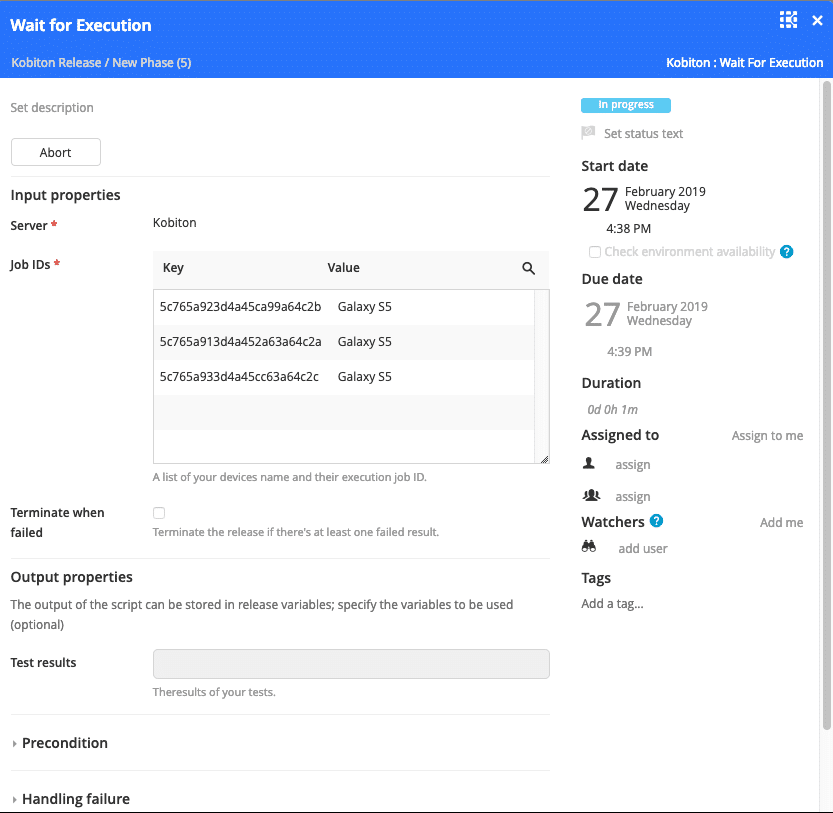
3. Wait for Execution

This task will collect the result from “Request Execute test” task to let you know the automated test is pass or fail.
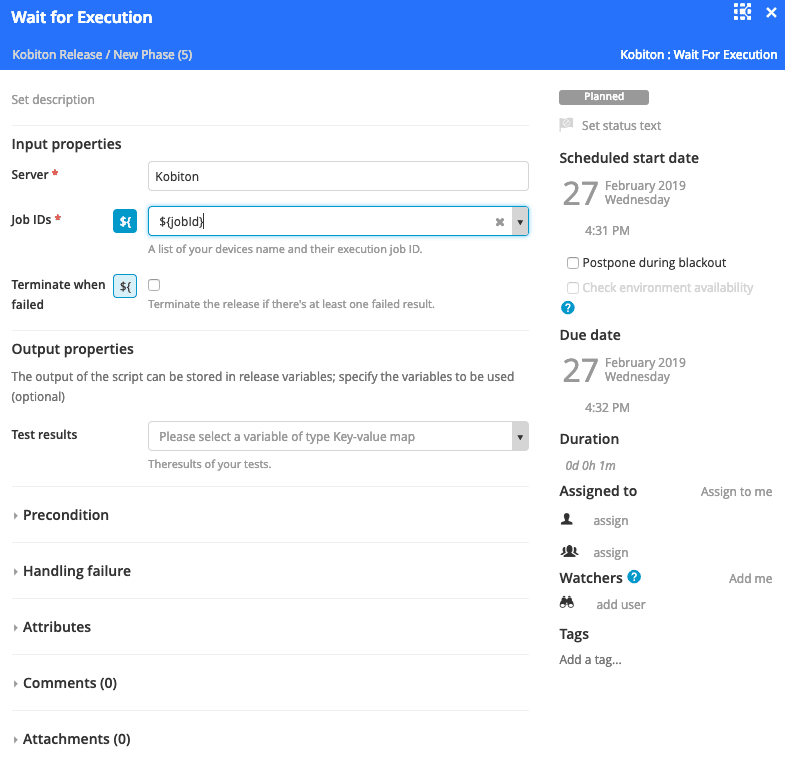
Image of Job ID: ${jobId} and rapid test
  • Select Server = Kobiton
  • Click the button  to select the global variable jobId

Release Result

After executing a release, we can see the result by clicking on each task.
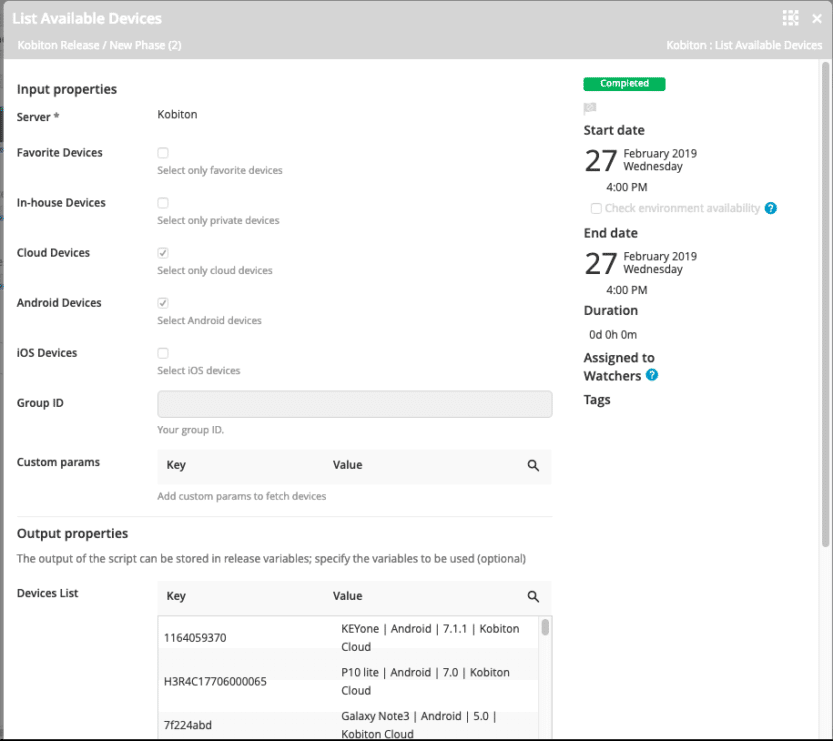
image of test results

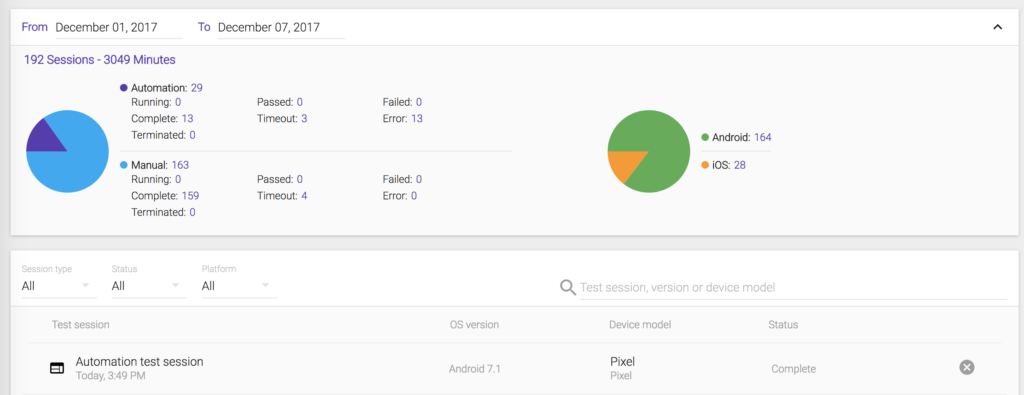
Test Results on Kobiton portal

Screen shot of pie tables with test results for using Kobiton with XebiaLabs
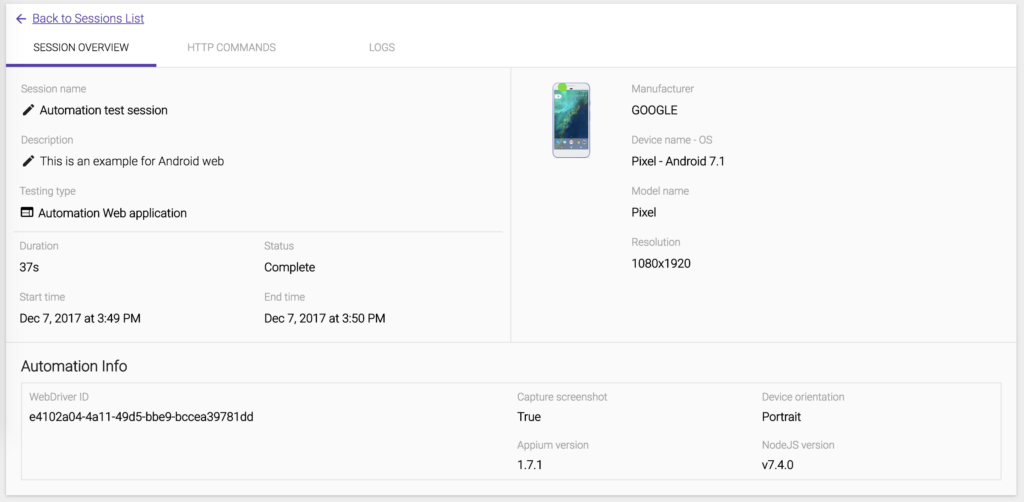
  • We can see the session overview for the latest test session.
Screen shot of automation test session session overview
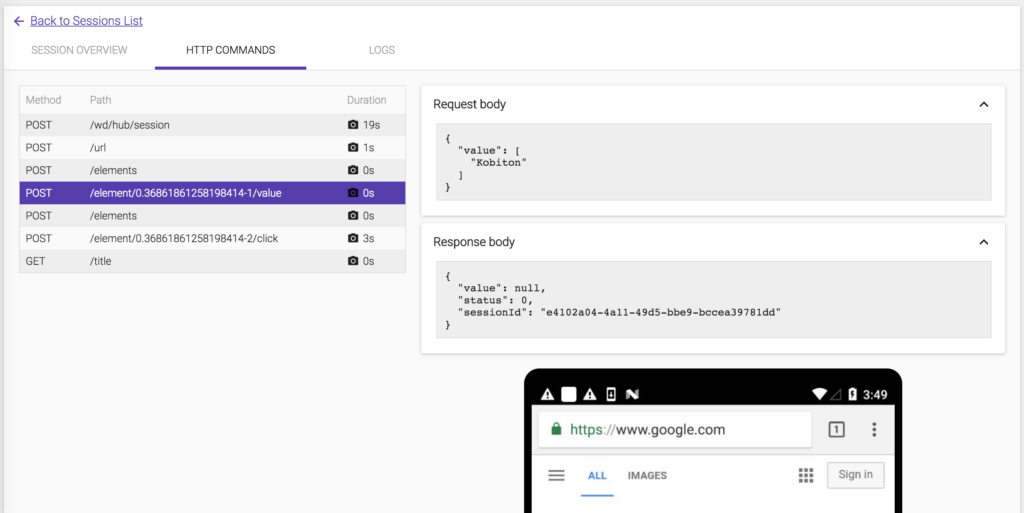
  • The HTTP Commands details are also included in the test result.
Screen shot of HTTP 
commands in test results

The log report includes device log and Appium log as well.
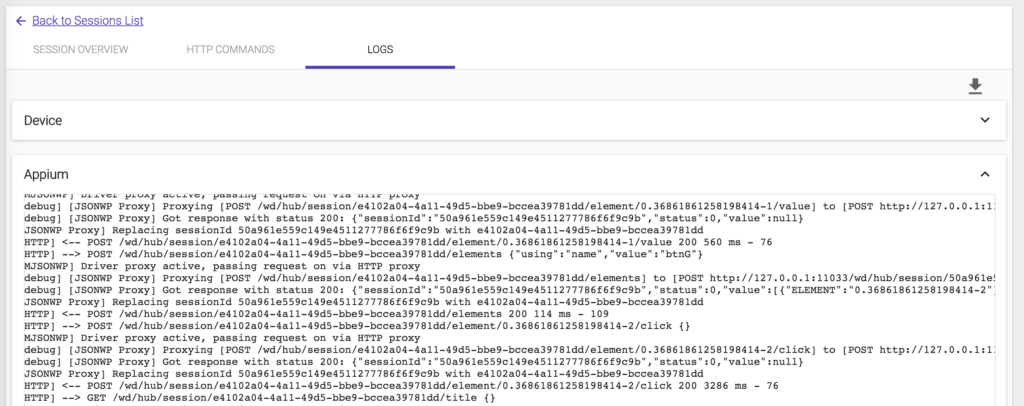
Screen shot of log of session details Appium script

Interested in Learning More?

Subscribe today to stay informed and get regular updates from Kobiton

Ready to accelerate delivery of
your mobile apps?

Request a Demo