
In today’s competitive mobile landscape, delivering a consistent experience across devices is not easy. Your application needs to perform reliably across different screen sizes, hardware capabilities, and operating systems. This is where Mobile Test Execution becomes essential. It allows teams to validate how an app behaves across real environments and reduces the risk of issues reaching users.
Scaling Mobile Test Execution is not just about increasing the number of tests. It is about running the right tests across the right devices and OS versions, in a way that supports fast development cycles without compromising quality.
Why Scaling Mobile Test Execution Matters
Users expect apps to work smoothly regardless of the device they use. Whether they are on Android or iOS, using an older phone or the latest model, performance and usability must remain consistent.
Without strong Mobile Test Execution, teams often miss issues that only appear under specific conditions, such as:
- UI inconsistencies across different screen sizes
- Performance issues on low or mid-range devices
- OS-specific bugs that appear only on certain versions
Scaling helps simulate real-world usage more accurately. When testing reflects how users actually interact with your app, releases become more stable, and user satisfaction improves.
Challenges in Mobile Test Execution Across Devices
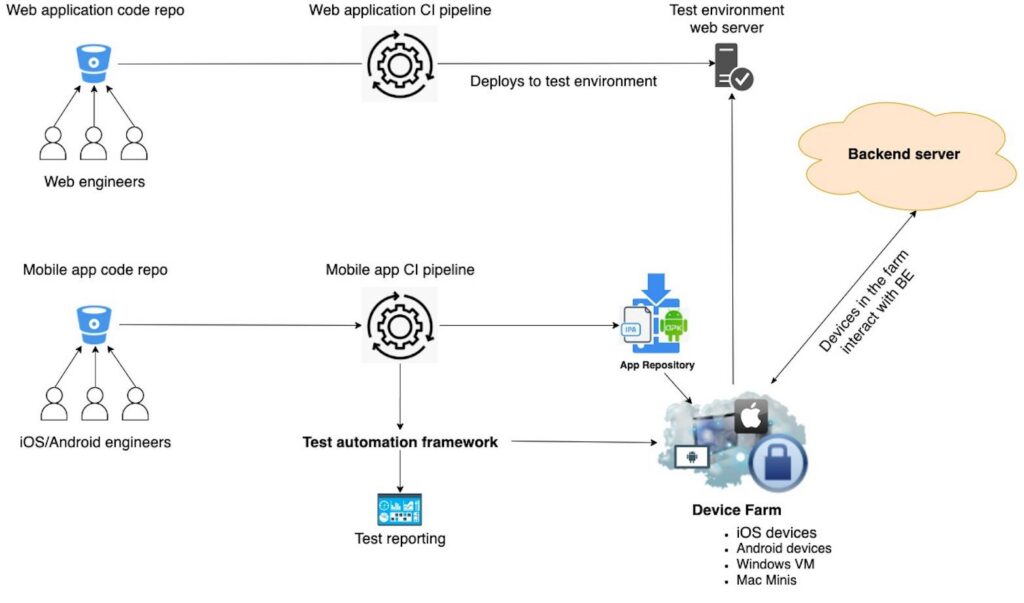
Managing testing across multiple devices and operating systems introduces real complexity. As teams try to scale Mobile Test Execution, a few common challenges appear:
Device Fragmentation
There are hundreds of device models in the market, each with different specifications. Testing on every device manually is not realistic, which makes coverage decisions important.
OS Version Variability
Users adopt OS updates at different speeds. Some run the latest version, while others stay on older ones. Supporting this range requires structured planning.
Execution Time
Running tests one device at a time slows everything down. As the number of devices increases, release timelines can quickly become a bottleneck.
Maintenance Effort
As your app evolves, test scripts need regular updates. Keeping them aligned across devices and OS versions takes ongoing effort and discipline.
Best Practices for Scaling Mobile Test Execution
To manage these challenges effectively, teams need a practical and focused approach. The goal is not to test everything, but to test what matters most in the most efficient way.
1. Use Parallel Testing
Running tests simultaneously across multiple devices reduces execution time significantly. Instead of waiting hours for results, teams can get feedback much faster and respond quickly.
2. Prioritize Device Coverage
Testing every device is unnecessary. Focus on devices and OS versions that reflect your actual user base. Analytics data should guide these decisions so effort stays aligned with real usage.
3. Use Cloud-Based Device Labs
Cloud platforms provide access to a wide range of real devices without the need to maintain physical hardware. Solutions like Kobiton allow teams to run tests on real devices at scale, making Mobile Test Execution more flexible and easier to manage.
4. Automate Test Scenarios
Manual testing alone cannot support scale. Automation allows repetitive test cases to run consistently across environments. This improves reliability and reduces the chances of human error.
5. Integrate with CI/CD Pipelines
When Mobile Test Execution is part of your CI/CD workflow, tests run automatically with every code change. This helps catch issues early and keeps the development process moving without delays.
Role of Automation in Mobile Test Execution
Automation plays a central role in scaling Mobile Test Execution. It allows teams to run large volumes of tests across multiple environments without constant manual input.
With automation in place:
- Tests run faster and more frequently
- Results remain consistent and easier to trust
- Teams can focus on complex edge cases instead of repetitive checks
When combined with parallel execution and cloud platforms like Kobiton, automation becomes even more effective. Teams can validate performance across real devices while keeping execution time under control.
Final Thoughts
Scaling Mobile Test Execution across multiple devices and OS versions is necessary for delivering reliable mobile applications. It allows teams to catch issues early, maintain performance standards, and provide a consistent experience for users.
By using parallel testing, automation, and cloud-based device access, teams can handle growing complexity without slowing development. A well-structured Mobile Test Execution strategy supports faster releases, better stability, and a stronger product overall.