
Mobile applications today are no longer simple interface driven products. They operate as connected systems powered by APIs, microservices, and distributed backend services. Because of this, validating only the user interface is not enough. Teams also need to confirm that backend responses, data flow, and service interactions work correctly under real mobile conditions.
A Mobile Device Cloud supports this layer of validation by connecting real devices with API testing, backend checks, and CI CD workflows in a scalable environment.
What is a Mobile Device Cloud in Modern Testing?
A Mobile Device Cloud is a remote infrastructure that provides access to real Android and iOS devices over the internet. Instead of maintaining a physical lab, teams can run both manual and automated tests on cloud hosted devices across different OS versions, hardware types, and network conditions.
These platforms allow engineering and QA teams to test at scale while integrating tools like Appium and native testing frameworks. Platforms such as Kobiton extend this capability by allowing teams to run tests on real devices while capturing detailed logs, videos, and performance data.
While traditionally used for UI testing, Mobile Device Clouds are now widely used for API validation, backend verification, and service level checks within real mobile workflows.
Why API and Backend Validation Needs a Device Cloud
Mobile API testing focuses on how the application communicates with backend systems. This includes validating request and response behavior, handling errors correctly, and maintaining consistent data across the system.
However, testing APIs in isolation creates blind spots because mobile environments introduce variables that backend tests alone cannot capture.
APIs can behave differently under unstable or slow networks
Device level differences can impact how requests are processed
UI behavior depends on backend timing and responses
Real user journeys combine UI, API, and backend interactions
A Mobile Device Cloud closes this gap by allowing teams to validate backend behavior while the application is actively running on real devices.
How Mobile Device Cloud Supports API and Backend Validation
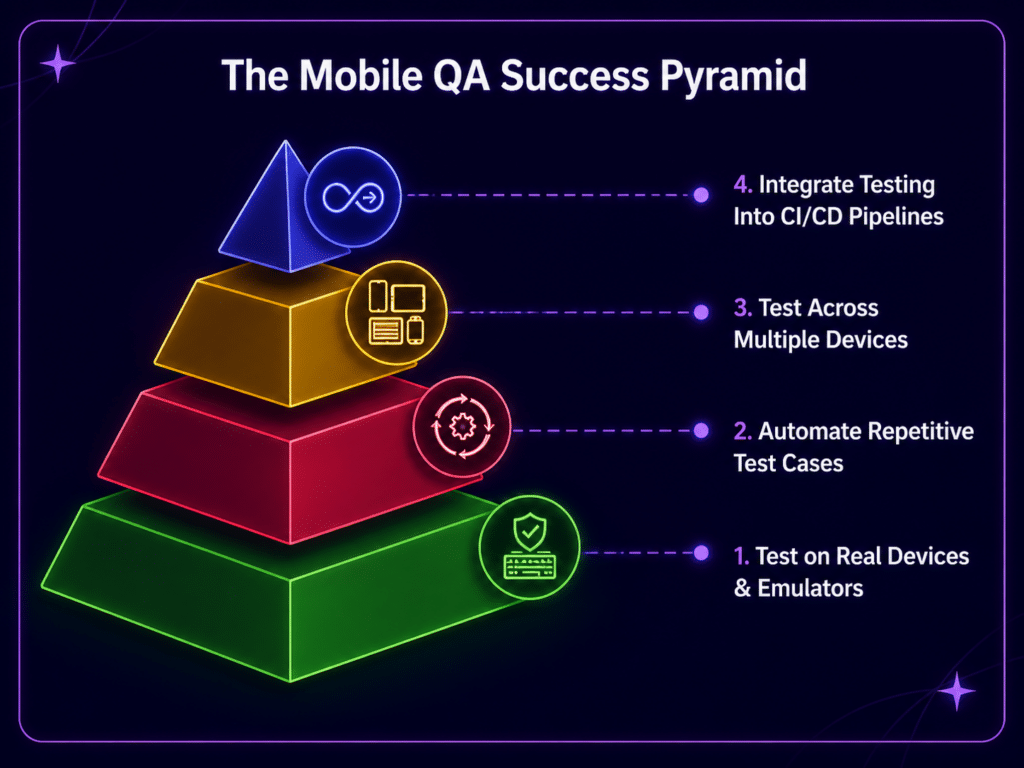
1. Real Device Driven API Verification
Instead of testing APIs separately, API calls are triggered directly through the mobile application on real devices. This allows teams to validate how backend responses behave within the actual user interface.
Teams can observe response accuracy, measure how API delays affect user experience, and confirm that error handling works correctly in real environments. It also helps uncover differences in how data is parsed across operating systems.
2. Backend Validation in End to End Mobile Flows
One of the strongest advantages is the ability to validate backend behavior as part of complete user journeys.
For example, a login flow involves token generation and session validation. A product search depends on API responses being correctly rendered in the interface. Payment flows require backend confirmation before the user sees a success screen.
By testing these flows on real devices, teams connect backend logic directly to real user behavior rather than treating APIs as isolated components.
3. CI CD Integrated API Testing on Device Clouds
Modern Mobile Device Cloud platforms integrate directly into CI CD pipelines. This allows teams to automatically validate APIs during every build.
Tests can run in parallel across multiple devices, helping teams identify backend issues faster. This also reduces the gap between backend changes and mobile release readiness. Platforms like Kobiton make it easier to connect automated testing with real device execution, improving feedback speed and reliability.
4. API Contract Validation Across Devices
Device clouds also support contract validation between frontend and backend systems. This includes verifying API structure, data types, and response consistency.
Teams can confirm that API responses remain stable across different operating systems and that new backend updates remain compatible with existing app versions. This reduces the risk of UI issues caused by backend changes.
5. Debugging Backend Issues Using Real Devices
When issues appear in production like conditions, reproducing them locally can be difficult. A Mobile Device Cloud allows teams to recreate these scenarios using real devices.
This helps identify intermittent API failures, network related delays, and device specific request issues. It also improves visibility into authentication problems and token handling errors that are often missed in controlled environments.
Mobile Device Cloud vs Traditional API Testing
Traditional API testing focuses on validating endpoints in isolation. While useful, it does not reflect how APIs behave within real mobile environments.
A Mobile Device Cloud approach connects backend systems with real devices, allowing teams to validate complete user flows rather than just individual endpoints. It also provides better debugging through a combination of logs, UI behavior, and device level insights.
Common Use Cases in Mobile Teams
Backend Regression Testing for Mobile Apps
Teams validate backend updates across multiple devices to detect issues that impact the user interface before release.
Authentication Flow Validation
Login systems, token refresh logic, and session handling are tested on real devices to confirm reliability.
Performance Testing of APIs via Mobile App
Teams measure how backend latency affects real user experience across different devices and conditions.
Multi Environment Testing
APIs are tested across development, staging, and production environments while running on real mobile devices to confirm consistency.
Challenges Solved by Mobile Device Cloud
A Mobile Device Cloud removes the need for maintaining physical device labs and reduces the gap between backend responses and UI behavior. It gives teams better visibility into backend issues from a mobile perspective and reduces unstable automation caused by inconsistent environments.
It also allows teams to scale API validation across a wide range of devices without increasing infrastructure complexity.
Role in Modern QA Strategy
A Mobile Device Cloud is more than just testing infrastructure. It acts as a bridge between mobile interface testing, API validation, backend reliability, and continuous delivery workflows.
By bringing these layers together, teams can identify issues earlier in the development cycle and reduce defects that reach production due to backend inconsistencies.
Final Thoughts
Mobile applications rely heavily on backend systems, and validating APIs alone is no longer enough. A Mobile Device Cloud allows teams to validate API behavior within real mobile environments, connecting backend accuracy with actual user experience.
By combining real device execution with API and backend validation, teams gain a clearer understanding of how their applications perform in real world conditions.