The Mobile Device Cloud has moved beyond being a simple remote access solution. In 2026, it acts as a core layer in modern quality engineering, bringing together real devices, automation, and AI to support faster releases and more stable mobile applications.
As mobile apps become more complex, teams are moving away from fixed testing setups. Instead, they rely on adaptive cloud environments that respond to real usage patterns and changing app behavior. This shift allows teams to test more intelligently, rather than just running repetitive checks.
What the Mobile Device Cloud Means in 2026
In 2026, the Mobile Device Cloud is a distributed system of real Android and iOS devices hosted in the cloud, combined with AI-driven testing capabilities. These systems are designed to:
- Allocate devices dynamically based on test needs
- Generate and maintain test scenarios automatically
- Detect UI and performance issues in real time
- Optimize how tests are executed
- Support large-scale CI pipelines without bottlenecks
Earlier versions focused mainly on giving remote access to devices. Today, the Mobile Device Cloud behaves more like an intelligent testing network that actively supports decision-making during test execution.
Evolution of Mobile Device Cloud Testing
The journey of the Mobile Device Cloud can be understood in three clear phases.
1. Early Cloud Testing
- Manual access to devices
- Limited automation support
- Basic compatibility checks across browsers and devices
2. Scaled Device Farms
- Large pools of real devices
- Parallel execution of test suites
- Integration with CI pipelines
3. AI-Driven Mobile Device Cloud in 2026
- Self-adapting test flows
- Predictive defect detection
- Intelligent device allocation
- Automated regression cycles
This progression has changed how QA teams design and manage their testing workflows. Testing is no longer just about execution, it is about making informed decisions throughout the process.
Role of AI in Mobile Device Cloud Testing
AI is now deeply integrated into the Mobile Device Cloud and plays a key role across the entire testing lifecycle.
Intelligent Test Generation
AI systems create test cases based on real signals such as user behavior, app usage data, and past defects. This helps teams focus on what actually matters in production.
Self-Healing Test Execution
When UI elements change, AI can adjust selectors and flows automatically. This reduces the need for constant script maintenance and helps keep automation stable.
Predictive Issue Detection
Machine learning models identify high-risk areas such as crash-prone flows, device-specific performance issues, and network-related failures before they reach production.
Smart Test Prioritization
Instead of running every test equally, AI ranks them based on recent code changes and risk levels. This allows teams to get faster feedback where it matters most.
Architecture of an AI-Driven Mobile Device Cloud
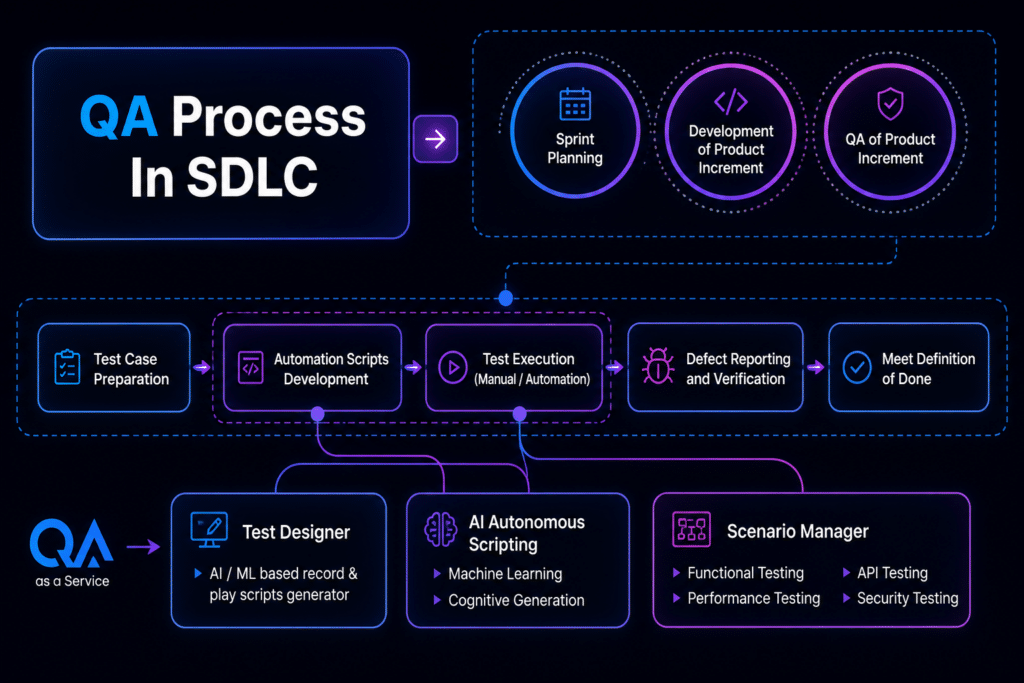
A modern Mobile Device Cloud setup includes several interconnected layers that work together.
Device Layer
- Real Android and iOS devices
- Multiple OS versions and screen sizes
- Cloud-hosted device pools
AI Intelligence Layer
- Test optimization engines
- Visual validation systems
- Anomaly detection models
Automation Layer
- Appium-based frameworks
- Scriptless automation tools
- CI pipeline integrations
Data Layer
- Test execution logs
- Device performance metrics
- User session analytics
Orchestration Layer
- Device scheduling
- Load balancing
- Parallel execution control
Each layer contributes to a system that is not only scalable but also responsive to real testing conditions.
Key Use Cases in 2026
Continuous Mobile Testing in CI
Every code commit triggers automated tests across real devices in the Mobile Device Cloud. This keeps feedback loops short and actionable.
Cross-Device UI Consistency Checks
AI validates layouts and behavior across different screen sizes and operating systems, reducing UI inconsistencies.
Performance Testing at Scale
Applications are tested under realistic load conditions across multiple devices to uncover performance bottlenecks early.
Release Risk Analysis
AI analyzes historical data and test results to predict how stable a release is likely to be.
Global User Experience Simulation
Testing runs across devices in different regions to reflect real user environments, including network and location variations.
Benefits of an AI-Driven Mobile Device Cloud
- Faster feedback cycles for development teams
- Reduced reliance on manual testing
- Stronger coverage across a wide range of devices
- More accurate defect detection
- Scalable execution without managing physical infrastructure
- Greater stability in production releases
Challenges Teams Still Face
Even with advanced systems, some challenges continue to exist.
Device Fragmentation
The number of devices and OS combinations keeps growing, making full coverage difficult.
Flaky Automation
UI changes and network instability can still lead to inconsistent test results.
Data Overload
Large volumes of test data require proper analysis to extract useful insights.
Skill Gaps
Teams need practical experience with AI assisted QA tools and cloud orchestration to fully use these systems.
Future Trends Shaping the Mobile Device Cloud
Autonomous Testing Systems
Testing pipelines that manage execution, reporting, and optimization with minimal human input.
Generative AI for Test Design
AI models creating complete test suites directly from user stories and requirements.
Real Time Visual Intelligence
Immediate detection of layout issues, rendering problems, and visual inconsistencies.
Personalized Device Allocation
Device selection based on user demographics, app behavior, and risk patterns.
Edge and Cloud Hybrid Testing
Combining local edge devices with cloud infrastructure to improve execution speed and reliability.
Best Practices for 2026 Mobile Device Cloud Adoption
- Focus on real device coverage instead of relying only on emulators
- Introduce AI based test prioritization early in the pipeline
- Keep automation scripts clean and modular
- Use parallel execution to reduce feedback time
- Track device performance trends regularly
- Align testing strategies with real user behavior
Kobiton Perspective on Mobile Device Cloud Evolution
Platforms like Kobiton are aligning closely with how mobile testing is changing. Instead of acting only as execution tools, they support a more intelligent testing approach by offering:
- Access to real devices in cloud environments
- Support for modern automation frameworks
- Integration with CI pipelines
- Scalable execution for growing teams
- Detailed session insights for faster debugging
Kobiton reflects the broader shift in the industry where testing platforms are expected to contribute to decision-making, not just execution.
Conclusion
The Mobile Device Cloud in 2026 has become a foundation for modern mobile testing. With AI integrated into everyday workflows, teams can release faster while maintaining strong quality standards.
By combining real device infrastructure with intelligent systems, organizations are moving toward testing environments that adapt, learn, and respond to real-world conditions. This is setting a new direction for how mobile applications are tested and released.