Cloud environments have changed how teams approach Mobile Test Execution, especially when dealing with device fragmentation, OS diversity, and fast release cycles. Instead of maintaining physical device labs, teams now run tests on remote real devices that connect directly with CI CD pipelines.
This shift allows teams to move faster, reduce operational overhead, and test across a wider range of devices without the complexity of managing hardware. Platforms like Kobiton make this practical by giving teams access to real devices on demand while keeping everything connected to their existing workflows.
This guide explains how cloud-based execution works, where it fits best, and where it may fall short so you can build a reliable long-term testing strategy.
What is Cloud-Based Mobile Test Execution?
Cloud-based Mobile Test Execution means running manual or automated tests on remote infrastructure that hosts real devices, emulators, or both. Teams can trigger tests through APIs, dashboards, or CI CD tools without needing physical access to devices.
A real device cloud gives access to actual smartphones and tablets across different OS versions, screen sizes, and hardware configurations. This allows teams to test under conditions that closely match real user environments.
Compared to local labs, cloud execution allows parallel testing across many devices at once. This reduces execution time and improves overall coverage without increasing operational complexity.
Why Cloud Based Mobile Test Execution Matters
The mobile ecosystem is highly fragmented. To achieve meaningful test coverage, teams often need to validate apps across dozens or even hundreds of device combinations. In many cases, reaching around ninety percent market coverage can require testing on more than one hundred and fifty devices.
Building and maintaining this level of infrastructure internally is expensive and time-consuming. Cloud-based execution solves this problem by providing:
On-demand access to devices
Scalable execution environments
Centralized test management
This allows teams to focus more on test quality and less on infrastructure management.
Key Benefits of Cloud Based Mobile Test Execution
Scalable Test Execution
Cloud platforms allow teams to scale instantly. You can run hundreds of tests across multiple devices at the same time without adding hardware. This supports continuous testing and shortens release cycles.
Real Device Coverage
Cloud environments provide access to a wide range of real devices. This makes it possible to validate UI rendering, performance metrics such as CPU and memory usage, and hardware features like GPS, camera, and biometrics. Results are far more reliable compared to simulators alone.
Faster Feedback with Parallel Testing
Parallel execution is one of the biggest advantages. Instead of running tests one after another, teams can execute multiple test suites at the same time, validate builds quickly, and catch regressions earlier in the development cycle.
Reduced Infrastructure Costs
Maintaining physical labs involves purchasing devices, updating operating systems, and ongoing maintenance. Cloud platforms remove these responsibilities through subscription-based pricing, making testing more cost-efficient over time.
Global Accessibility and Collaboration
Cloud environments are accessible from anywhere. Distributed teams can run tests remotely, share logs and recordings, and collaborate in real time. This improves communication between QA, development, and DevOps teams.
CI CD Integration
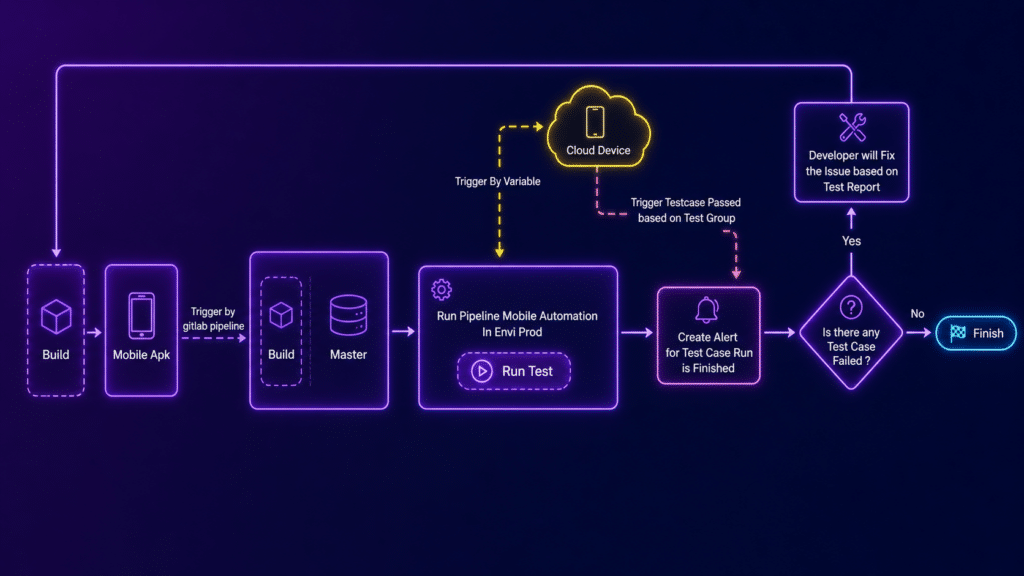
Cloud-based execution integrates smoothly with CI CD pipelines. Tests can be triggered automatically on every build, allowing continuous validation and faster release cycles. Platforms like Kobiton are commonly used in these setups to connect automated testing with real device coverage.
Limitations of Cloud Based Mobile Test Execution
Cloud testing is powerful, but it comes with trade-offs that teams need to understand.
Device Availability and Queue Delays
Since cloud environments rely on shared infrastructure, teams may experience waiting times for specific devices, especially during peak usage. This can slow down feedback when timing is critical.
Network Dependency
Because tests run remotely, performance depends on network stability. Latency, slower execution, and occasional instability can affect test results, particularly for automation.
Limited Device Control
Cloud providers restrict certain device-level access to maintain stability and security. This can limit deep system-level testing, custom configurations, and integration with external hardware.
Debugging Complexity
Debugging in a cloud environment can take more effort because there is no physical access to the device. Teams rely on logs, screenshots, and video recordings. Without clear visibility and proper logging, identifying root causes can take longer.
Security and Compliance Concerns
Organizations handling sensitive data may need to address privacy requirements, regulatory constraints, and risks associated with shared infrastructure.
Cloud vs Local Mobile Test Execution
Cloud-based execution offers high scalability, broad device coverage, and remote accessibility, while local device labs provide full control and direct access to hardware. Cloud environments are faster to scale and more cost-efficient, while local labs are better suited for deep debugging and specialized testing scenarios.
Real World Use Cases of Cloud Based Mobile Test Execution
Regression Testing at Scale
Teams can run large regression suites across multiple devices in parallel before every release, reducing the risk of missed issues.
Cross Device Compatibility Testing
Applications can be validated across different screen sizes, operating systems, and manufacturer-specific variations to ensure consistent behavior.
CI CD Pipeline Automation
Mobile Test Execution can be triggered automatically during code commits, pull requests, and nightly builds, keeping quality checks continuous.
Performance and UX Validation
Teams can test under real-world conditions, such as battery usage, network variability, and interaction delays, to better understand user experience.
Remote QA Teams
Distributed teams can perform testing without needing physical devices, improving flexibility and collaboration.
On-Demand Access for Edge Cases
Rare or legacy devices can be accessed when needed, allowing teams to test edge cases without investing in additional hardware.
Best Practices for Cloud Based Mobile Test Execution
Focus on high-impact devices based on real user data
Use emulators for early-stage testing and real devices for final validation
Run tests in parallel to save time
Maintain detailed logs and session recordings for faster debugging
Plan test execution to avoid peak usage delays
When to Use Cloud vs Hybrid Testing
Cloud-based execution works best when you need large-scale device coverage, when your team is distributed, and when automated testing runs frequently.
A hybrid approach that combines cloud and local devices is more suitable when deep debugging is required, when there are strict security requirements, or when hardware-level access is needed.
Final Thoughts
Cloud based Mobile Test Execution has become a standard part of modern mobile development. It addresses key challenges such as scale, speed, and device coverage, while introducing trade-offs related to control and dependency on infrastructure.
The most effective approach is not choosing between cloud and local environments, but using both where they make the most sense. Cloud platforms like Kobiton handle large-scale execution and coverage, while local setups provide deeper control when needed. This balance allows teams to maintain quality without slowing down development.