Mobile Game Testing is very different from traditional mobile app testing. Games are highly interactive, visually demanding, and driven by player behavior, which makes them harder to validate using scripted automation alone.
Automation helps teams move faster and handle larger workloads, but it cannot fully replace human testing in gaming environments. This guide explains where automation works well, where it falls short, and how a hybrid testing approach that combines manual testing, automation, and real device clouds delivers more reliable results.
What Makes Mobile Game Testing Unique?
Mobile games introduce challenges that most standard apps do not face:
Real time rendering and frame rate sensitivity
Complex gestures such as multi touch, swipes, and pressure inputs
Physics engines that create unpredictable outcomes
Heavy reliance on GPU, memory, and battery performance
Highly variable player behavior with non linear flows
Unlike form based apps, games rarely follow predictable paths. This makes it difficult for traditional automation scripts to fully validate gameplay scenarios.
Where Automation Fits in Mobile Game Testing
Automation still plays an important role, but only in specific areas of testing.
Functional Validation
Automation works well for validating basic flows such as menu navigation, login systems, in app purchases, and simple UI interactions. Tools like Appium and Espresso can handle these scenarios effectively, especially when connected to platforms like Kobiton that provide access to real devices.
Regression Testing at Scale
Automation is highly effective for re running stable test cases across multiple builds. It helps validate core gameplay loops after updates and supports parallel execution across many devices. With a real device cloud like Kobiton, teams can run tests across hundreds of devices at the same time, improving both speed and coverage.
Performance Baselines
Automation can track measurable metrics such as app launch time, memory usage, and crash detection. However, understanding whether the gameplay feels smooth still requires human input.
The Limits of Automation in Mobile Game Testing
Automation has clear limitations when applied to mobile games.
Unpredictable Player Behavior
Automated scripts follow predefined paths, but real players behave in unpredictable ways. They tap randomly, switch between apps, and interact in ways that scripts cannot fully replicate.
Visual and UX Validation
Games rely heavily on animations, transitions, and visual feedback. Automation tools cannot reliably judge whether something looks right or feels natural to the player.
Complex Gesture Handling
Many games depend on advanced interactions such as multi touch inputs and rapid gesture combinations. Even advanced frameworks struggle to accurately reproduce these actions.
Device Fragmentation
Different devices have varying GPUs, CPUs, and screen resolutions, which can lead to inconsistent gameplay. Testing across thousands of device and OS combinations is not practical without access to real device clouds.
Flaky Test Automation
Game interfaces change frequently. Dynamic elements, timing issues, and regular updates can make test scripts unstable and difficult to maintain.
Key Challenges in Automating Mobile Game Testing
Real Time Performance Variability
Games depend on frame rate, latency, and rendering speed. Automation tools can capture metrics, but they cannot measure perceived smoothness from a user perspective.
Environment Simulation Gaps
Games react to real world conditions such as network changes, battery levels, and background interruptions. Automation can simulate some of these factors, but not all.
Scaling Across Devices
To properly test across low end, mid range, and high end devices, teams need access to real device infrastructure. Without it, coverage remains limited.
Test Data and State Management
Games involve levels, player progression, and dynamic states. Managing and resetting these states for automation is complex and time consuming.
Hybrid Approach: The Practical Solution
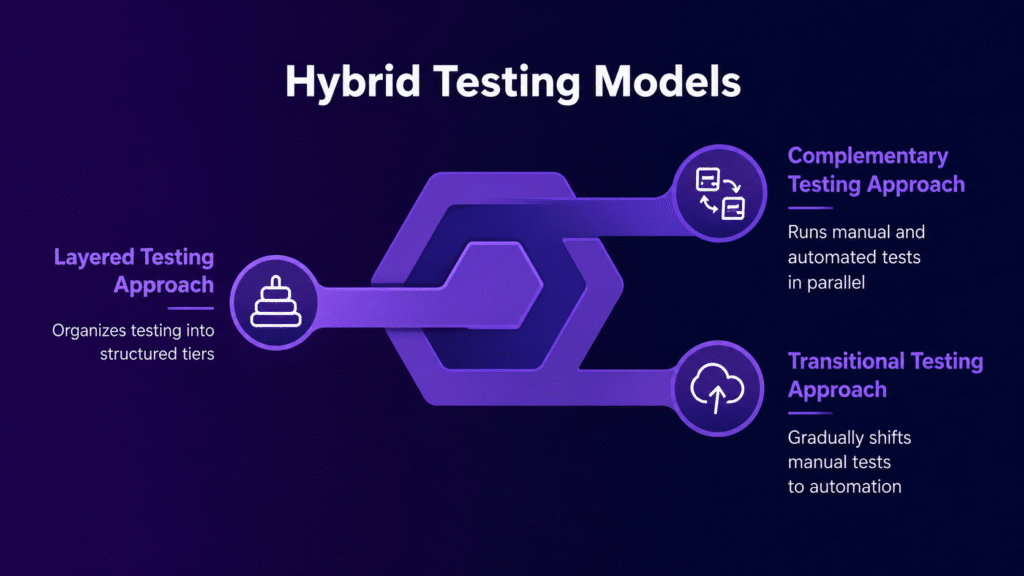
The most effective strategy for Mobile Game Testing is a hybrid approach that combines three key components:
Automation
Used for regression testing, smoke testing, and integration within CI CD pipelines.
Manual Testing
Used for validating gameplay experience, user interactions, and edge cases that require human judgment.
Real Device Cloud
Platforms like Kobiton provide access to thousands of real devices, support parallel execution, and allow testing under real world conditions such as network changes and sensor interactions.
This combination fills the biggest gap in automation by adding real user context to testing. Automation handles repeatable checks, real devices provide accuracy, and human testers validate gameplay quality.
Recommended Testing Architecture
A practical setup includes:
CI CD integration to trigger automated tests on every build
Execution on real devices for accurate coverage
Collection of logs, videos, and performance data for analysis
Test distribution typically looks like this:
Unit testing handled through automation
Functional UI testing automated on real devices
Gameplay experience tested manually
Performance tested using a mix of automation and manual validation
Compatibility validated using real device clouds
Best Practices for Mobile Game Testing
Focus on high priority devices based on your target audience
Use automation only for stable and repeatable workflows
Combine emulators for early testing with real devices for final validation
Monitor unstable test scripts and fix or remove them quickly
Design applications with testing in mind by adding debug options and stable identifiers
Future Trends in Mobile Game Testing
AI assisted testing is gaining traction for generating test cases and identifying anomalies, but it still requires human validation.
Autonomous testing is improving, yet it cannot determine whether a game is enjoyable or engaging.
Real device clouds will continue to play a larger role as device fragmentation increases and teams need scalable testing environments.
Conclusion
Mobile Game Testing cannot depend on automation alone.
Automation provides speed and consistency
Manual testing adds human judgment
Real device clouds deliver real world accuracy
A hybrid approach that combines all three allows teams to reduce release risks, improve gameplay quality, and maintain faster development cycles without being limited by automation constraints.