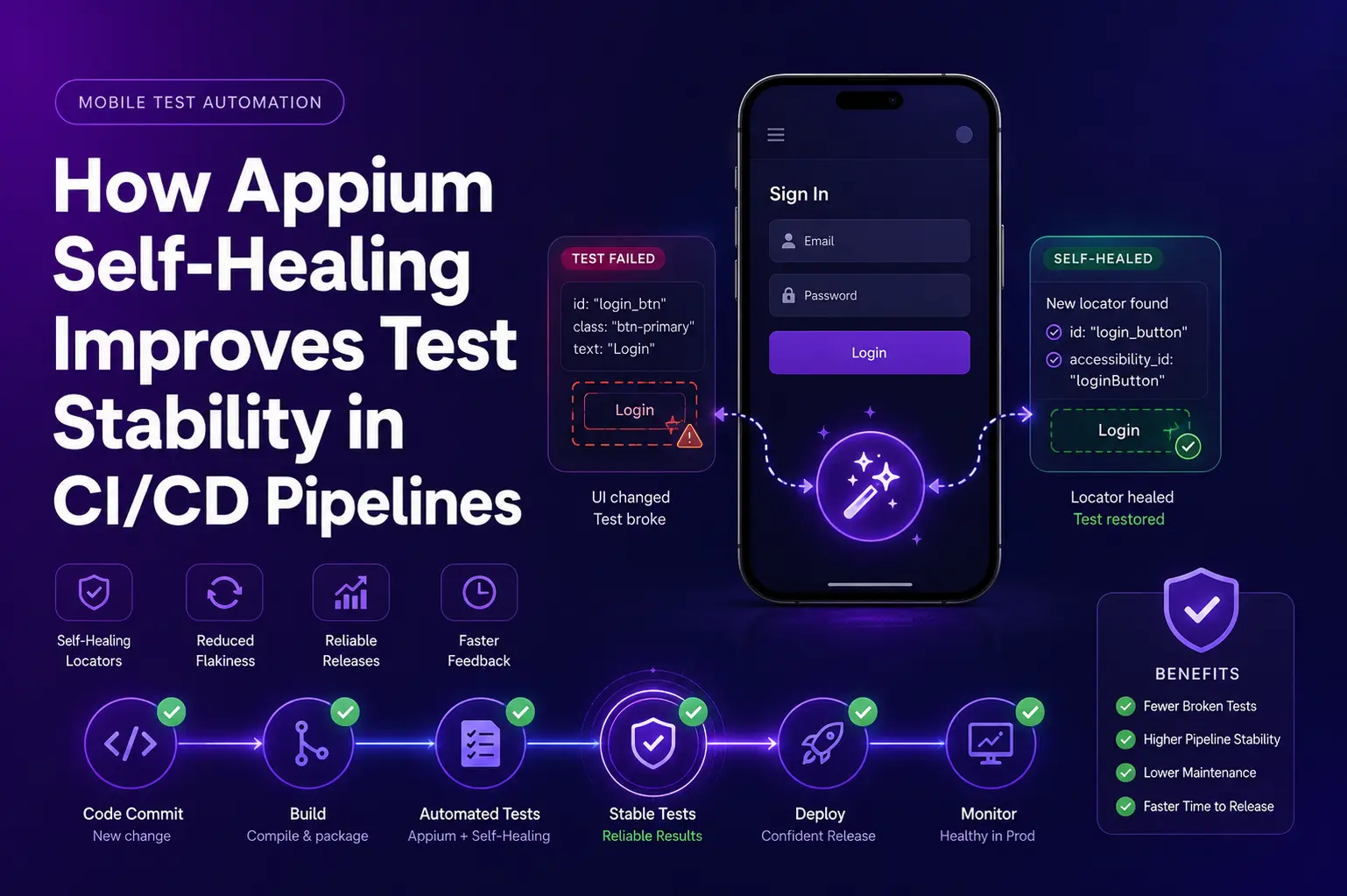
In modern software development, speed and reliability must work together. Teams are expected to release updates quickly while still maintaining a high level of quality. The problem is that automated tests often become unstable as applications change. Even small UI updates can cause tests to fail, which disrupts CI/CD pipelines and slows everything down.
This is where Appium Self-Healing becomes valuable. It helps make test automation more stable and dependable, even when the application is constantly evolving. Platforms like Kobiton also support this approach by providing real device environments where these intelligent testing methods can run more reliably.
What is Appium Self-Healing?
Appium Self-Healing is a capability that allows automated tests to adjust to changes in the application’s user interface without manual intervention. Instead of failing when an element locator changes, the system attempts to find alternative ways to identify that element and continue the test.
In traditional automation, scripts rely on fixed locators such as XPath, IDs, or class names. This creates a fragile setup where even a small UI update can break the test. Appium Self-Healing reduces this dependency by using more flexible strategies that adapt to changes, helping tests stay functional as the app evolves.
Why Test Stability Matters in CI/CD Pipelines
CI/CD pipelines are built to move code from development to production quickly. When tests are unstable, they create unnecessary friction in this process.
Unstable tests often lead to:
- Delayed releases due to repeated failures
- Increased debugging time spent on non-critical issues
- Lower trust in automation results
When teams cannot rely on test results, they either spend more time verifying them or start ignoring failures altogether. Appium Self-Healing helps avoid this situation by keeping test execution consistent, which allows pipelines to run smoothly and predictably.
How Appium Self-Healing Works
Appium Self-Healing relies on intelligent logic and historical test data to handle changes in UI elements. When a locator fails, the system does not immediately stop the test. Instead, it searches for alternative matches based on attributes, structure, and patterns within the application.
Some of the core mechanisms include:
- Fallback locators
The system automatically attempts multiple locator strategies if the primary one fails - Similarity-based matching
Elements are identified based on how closely they match previous versions, rather than exact values - DOM structure analysis
Changes in layout or hierarchy are evaluated to locate elements more accurately
Together, these approaches allow tests to continue running even when the UI changes slightly.
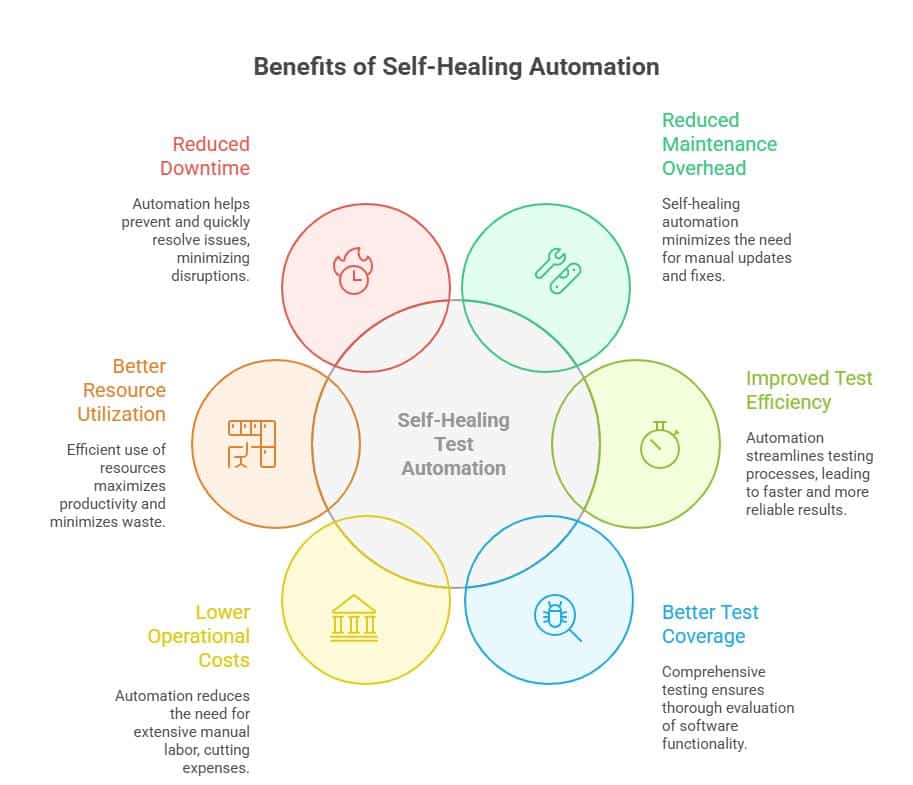
Benefits of Appium Self-Healing in CI/CD
1. Reduced Test Failures
One of the most immediate benefits is fewer false failures. Tests are less likely to break due to minor UI changes, which improves the overall reliability of the pipeline.
2. Faster Debugging
When fewer tests fail unnecessarily, teams can focus their time on real defects instead of fixing broken scripts.
3. Improved Test Coverage
With more stable automation, teams can safely expand their test suites without worrying about constant maintenance.
4. Better Use of Resources
Less time spent updating locators means more time can be invested in improving product quality and adding meaningful tests.
5. Stronger Confidence in Continuous Delivery
Reliable pipelines make it easier to release updates consistently. Teams can move forward with deployments knowing their tests are dependable. When combined with real device testing platforms like Kobiton, this confidence increases further because results reflect real user conditions.
Best Practices for Implementing Appium Self-Healing
To get the most value from Appium Self-Healing, it helps to follow a few practical guidelines:
- Use more than one locator strategy instead of relying on a single identifier
- Keep test scripts clean and well-structured so fallback logic works effectively
- Review healing reports regularly to understand what changes are happening in the UI
- Combine self-healing with a strong test design rather than depending on it entirely
These practices help maintain a balance between automation flexibility and test accuracy.
Challenges to Consider
Appium Self-Healing is powerful, but it is not a complete substitute for good test design. If used without proper oversight, it can sometimes hide genuine UI issues by automatically adjusting to changes that should be reviewed.
Teams should treat self-healing as a support system rather than a replacement for thoughtful testing. Periodic manual validation still plays an important role in maintaining quality.
Conclusion
In fast-moving development environments, stable test automation is essential for keeping CI/CD pipelines efficient. Appium Self-Healing addresses a common problem by reducing failures caused by UI changes and keeping tests running smoothly.
It allows teams to save time, improve efficiency, and maintain confidence in their release process. When used alongside platforms like Kobiton, which provide real device testing and reliable execution environments, the overall testing strategy becomes even stronger.
By adopting Appium Self-Healing with the right approach, teams can build more dependable pipelines and deliver high-quality applications with fewer interruptions.
FAQs
What is Appium Self-Healing?
Appium Self-Healing is a feature that allows automated tests to adapt to UI changes by finding alternative ways to identify elements when locators change.
Why is Appium Self-Healing important for CI/CD pipelines?
It reduces test failures caused by minor UI updates, helping teams maintain stable automation and keep CI/CD pipelines running smoothly.
How does Appium Self-Healing work?
It uses fallback locators, similarity-based matching, and UI structure analysis to locate elements when original locators no longer work.
What are the benefits of Appium Self-Healing?
Key benefits include fewer false test failures, reduced maintenance effort, faster debugging, improved test coverage, and greater confidence in continuous delivery.