LiveOps has transformed the way mobile games function after launch. Rather than releasing games as finished products, developers now treat them as dynamic systems, with ongoing events, adjustments, and monetization changes. This shift makes Mobile Game Testing a continuous activity that directly supports player retention, revenue consistency, and gameplay fairness. This guide outlines how to approach testing LiveOps content such as events, updates, and in-game economy changes by addressing real-world challenges in mobile gaming today.
1. Understanding LiveOps in Mobile Games
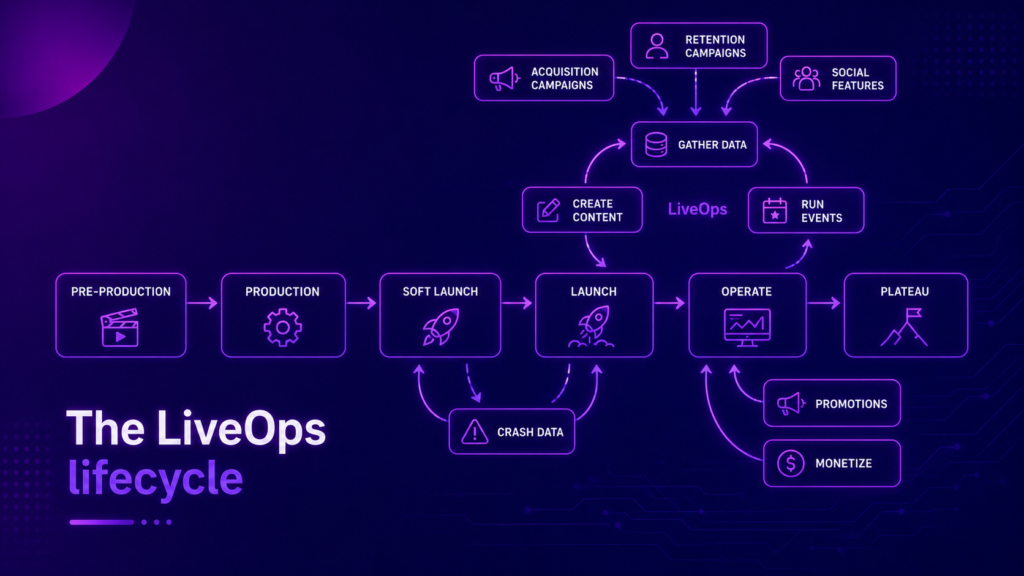
LiveOps (Live Operations) refers to the ongoing management of a game after release. It covers events, content updates, special offers, and system adjustments. In LiveOps-driven games, the experience is never static. Instead, developers:
- Rotate seasonal events and limited-time modes
- Regularly adjust difficulty and rewards
- Dynamically change monetization offers
- Run A/B tests on pricing and progression
Modern platforms now support rapid configuration changes without requiring full app updates. This flexibility makes testing even more crucial, as changes can go live instantly.
2. Why LiveOps Testing Is Different from Standard Game Testing
Traditional game testing focuses on:
- Gameplay stability
- UI/UX consistency
- Device compatibility
LiveOps testing introduces additional complexities, such as:
- Frequent content updates
- Time-sensitive events
- Player segmentation
- Real-money economy adjustments
Even a minor error in LiveOps logic can cause issues like:
- Broken progression systems
- Unfair rewards
- Damaged monetization funnels
- Increased player churn within hours
Since updates are continuous, regression testing becomes an ongoing task, not just part of a release cycle.
3. Testing Live Events in Mobile Games
Live events are one of the most sensitive components of LiveOps because they directly impact player engagement and spending behavior. Key areas to test for live events include:
Event Scheduling Logic
- Ensure start/end times are accurate across time zones
- Avoid event overlap conflicts
- Verify proper restart or rerun behavior
Reward Distribution
- Ensure the correct currency or items are granted
- Prevent duplicate rewards
- Account for edge cases where players may not fully participate in the event
Player Segmentation
- Test VIP versus new player event access
- Verify region-based event availability
- Ensure returning players are eligible for rewards
Load and Performance Under Peak Traffic
- Test event launch spikes when thousands of players join simultaneously
- Monitor server response delays during reward claims
Real-time configuration updates in LiveOps systems make pre-rollout validation crucial.
4. Testing Game Updates in LiveOps Pipelines
Updates in LiveOps games are frequent and often modular, meaning only certain parts of the game are updated. Here’s what to focus on when testing these updates:
Regression Across Core Systems
- Store flows, purchases, and confirmations
- Matchmaking systems
- Inventory and progression synchronization
Cross-Version Compatibility
- Ensure older app versions still function correctly
- Verify that server-side logic supports different app versions
Device and OS Fragmentation
- Test updates across a range of devices, including low-end Android, various iOS versions, and different screen sizes
Device fragmentation remains a significant source of hidden bugs.
Network Conditions
- Simulate poor connectivity (packet loss, high latency)
- Test offline/online transitions
- Check reconnection handling during gameplay
5. Testing In-Game Economy Changes
In-game economy updates are particularly sensitive because they directly affect monetization and player satisfaction. Key areas for testing include:
Currency Flow Validation
- Ensure earn rates and spend rates are balanced
- Detect reward inflation or imbalances
- Identify potential exploits, like currency duplication
Pricing and Store Changes
- Test offer visibility for the right player segments
- Ensure discount logic is accurate
- Validate bundle configurations
Progression Balance
- Check adjustments to level difficulty
- Ensure consistent pacing of rewards
- Maintain consistent time-to-progress across players
Even small changes to the economy can significantly impact player behavior and long-term retention.
A/B Testing Integrity
- Ensure correct variant assignment
- Prevent overlap between experiments
- Maintain data consistency across all analytics systems
6. Regression Testing Strategy for LiveOps
Given the frequency of LiveOps updates, regression testing must be continuous. A solid strategy includes:
- Automated smoke tests for core functionalities (login, store, gameplay loop)
- Nightly regression tests on device clouds
- Feature-based test suites for each event or update
- Post-rollout production monitoring
Many teams integrate automated testing pipelines that simulate real gameplay to catch issues before releases.
7. Real Device Testing vs Emulators in LiveOps
Emulators:
- Fast for functional checks
- Useful for early-stage validation
Real Devices:
- Reveal performance issues such as FPS drops, overheating, crashes, and memory leaks
- Detect UI issues across different screen densities
- Simulate real-world network behavior under instability
LiveOps validation relies heavily on real device coverage due to the diversity of players’ hardware.
8. Common LiveOps Testing Challenges
Hidden Dependency Breaks
A change in one system (e.g., rewards) can unexpectedly impact another system (e.g., store logic).
Time-Based Bugs
Events can malfunction across:
- Daylight savings changes
- Regional time zone discrepancies
- Server clock mismatches
Economy Exploits
Players may find ways to:
- Duplicate in-game currency
- Trigger reward loops
- Bypass cooldown systems
Partial Rollout Issues
Staged releases might expose bugs only to a subset of players, making reproduction and resolution more difficult.
9. Best Practices for Mobile Game LiveOps Testing
- Treat every LiveOps change as a mini-release
- Maintain dedicated test suites for each event type
- Use real-time analytics to monitor post-deploy behavior
- Simulate player segments (new, paying, returning) during tests
- Test economy changes in sandbox environments before pushing to production
- Automate regression testing for repetitive tasks
- Monitor crash and purchase funnels after every update
10. How Platforms Like Kobiton Help LiveOps Testing
In LiveOps environments, both speed and device coverage are critical. Real device clouds, like Kobiton, support teams by:
- Running automated regression tests on multiple devices in parallel
- Validating updates before they are rolled out globally
- Testing economy changes under realistic conditions
- Catching device-specific bugs early
By using a real device cloud like Kobiton, teams can scale their testing without relying on limited in-house device labs, making LiveOps cycles faster and more efficient.
Final Thoughts
LiveOps has transformed mobile games into ever-evolving systems where updates, events, and economy changes happen continuously. Testing is no longer just a phase it’s a core part of the operational structure. Teams that align their Mobile Game Testing with LiveOps pipelines can achieve better stability, safer monetization changes, and a more consistent player experience with every update.