What Is Mobile Automation Testing and Why Is It Crucial for Your App Development?
In today’s fast-paced digital world, mobile apps have become essential for business success. Whether you’re building an e-commerce platform, a social media app, or a gaming solution, ensuring your app performs flawlessly is critical. This is where mobile automation testing plays a vital role, enabling developers and testers to run efficient, accurate, and scalable tests.
But what exactly is mobile automation testing, and why is it so important for modern app development? Let’s explore this concept and its benefits, especially when testing mobile apps for Android and iOS.
Understanding Mobile Automation Testing
Mobile automation testing involves using specialized tools and scripts to automatically evaluate the functionality, performance, and usability of mobile applications. Unlike manual testing, where testers repeatedly perform the same actions, automated tests are executed by software. This results in faster, more reliable, and consistent testing across multiple devices and operating systems.
Through automation, you can simulate real user interactions such as tapping buttons, scrolling, and entering text. This helps identify bugs early in the development cycle, ensuring the app meets performance and usability standards before release.
Platforms like Kobiton further enhance this process by providing real-device testing environments, allowing teams to validate their apps under real-world conditions with greater accuracy.
Why Mobile Automation Testing Is Crucial for App Development
In a mobile-first world, automation is no longer optional it’s essential. As apps become more complex, relying solely on manual testing becomes inefficient and impractical. Here’s why automated mobile testing is critical for building high-quality apps:
1. Faster Time-to-Market
Automation allows you to execute hundreds or even thousands of tests in a fraction of the time required for manual testing. This speed is crucial when meeting tight deadlines or releasing frequent updates. Whether you’re working in an agile environment or focusing on continuous performance testing, automation significantly accelerates development cycles.
2. Improved Accuracy and Consistency
Manual testing is prone to human error, especially with repetitive tasks. Automation eliminates this risk by running tests with precision and consistency. Each test is executed the same way every time, ensuring reliable and repeatable results.
3. Wider Test Coverage Across Multiple Devices
Mobile apps must perform seamlessly across a wide range of devices, screen sizes, and operating systems. Automation enables parallel testing across multiple configurations, something that is nearly impossible with manual efforts. This ensures your app works smoothly on both the latest devices and older models.
Using platforms like Kobiton, teams can access a wide variety of real devices, making it easier to validate performance across different environments without maintaining physical device labs.
4. Early Bug Detection
Automated tests can be integrated into your continuous integration (CI) pipeline. This means every time new code is added, tests are automatically triggered. Early detection allows developers to fix issues quickly, preventing them from escalating into costly problems later.
5. Cost-Effectiveness
Although setting up automation requires an initial investment, it saves significant time and resources in the long run. Automated tests can be reused across builds and updates, reducing repetitive effort. Over time, this leads to lower testing costs and improved efficiency.
Mobile App Testing Frameworks: The Backbone of Automation
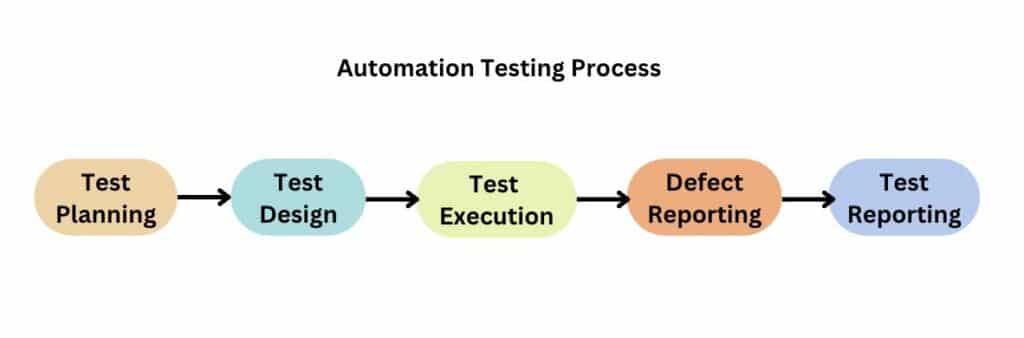
Mobile automation testing relies on robust testing frameworks that provide structure and scalability. These frameworks allow developers to write and execute test scripts efficiently across platforms.
Popular frameworks include:
- Appium – An open-source framework that supports both Android and iOS testing using a single codebase
- Espresso – Designed specifically for Android apps, offering fast and reliable UI testing
- XCUITest – Built for iOS apps, providing deep integration with Apple’s ecosystem
These frameworks support multiple programming languages such as Java, Python, and JavaScript, making them flexible for different development teams.
The Role of Automated UI Testing for Mobile Apps
Automated UI testing is a critical component of mobile automation testing. Since the user interface is the first point of interaction, ensuring it is smooth, responsive, and error-free is essential for user retention.
Automated UI tests simulate user interactions with buttons, menus, and other elements to verify that everything works as expected. This is especially important for feature-rich apps with complex interfaces.
With the help of automated testing tools, teams can quickly validate UI behavior, identify design issues, and deliver a seamless user experience.
Best Practices for Mobile Automation Testing
To maximize the effectiveness of mobile automation testing, follow these best practices:
Use a mix of real devices and emulators
Emulators are useful during early development stages, but real devices provide more accurate results by reflecting real-world conditions.
Test under different network conditions
Mobile apps must perform well across varying network speeds such as 3G, 4G, and Wi-Fi. Automation allows you to simulate these conditions and evaluate performance effectively.
Prioritize high-impact test cases
Focus on automating repetitive tasks and critical functionalities, such as core features and performance-related scenarios.
Integrate with CI/CD pipelines
Embedding automation into your CI/CD workflow ensures continuous testing, faster feedback, and quicker releases.
Conclusion
Mobile automation testing has become a game-changer for modern app development. It helps teams ensure high-quality performance, reduce testing time, and deliver better user experiences.
By leveraging automated testing tools, robust frameworks, and platforms like Kobiton, developers can confidently test their apps across multiple devices, operating systems, and network conditions. Implementing automated UI testing and integrating automation into your development workflow will not only improve app quality but also significantly reduce time-to-market.
FAQs
What is mobile automation testing?
Mobile automation testing uses tools and scripts to automatically test a mobile app’s functionality, performance, usability, and UI across different devices and operating systems.
Why is mobile automation testing important?
It helps teams test apps faster, improve accuracy, detect bugs early, reduce manual effort, and release higher-quality apps with more confidence.
Which frameworks are used for mobile automation testing?
Common mobile automation testing frameworks include Appium, Espresso, and XCUITest for testing Android and iOS apps.
How does mobile automation testing improve app quality?
It allows teams to run consistent tests across multiple devices, screen sizes, operating systems, and network conditions to catch issues before release.
Should mobile automation testing be added to CI/CD pipelines?
Yes. Adding automation to CI/CD helps run tests whenever new code is added, giving teams faster feedback and reducing the risk of bugs reaching users.