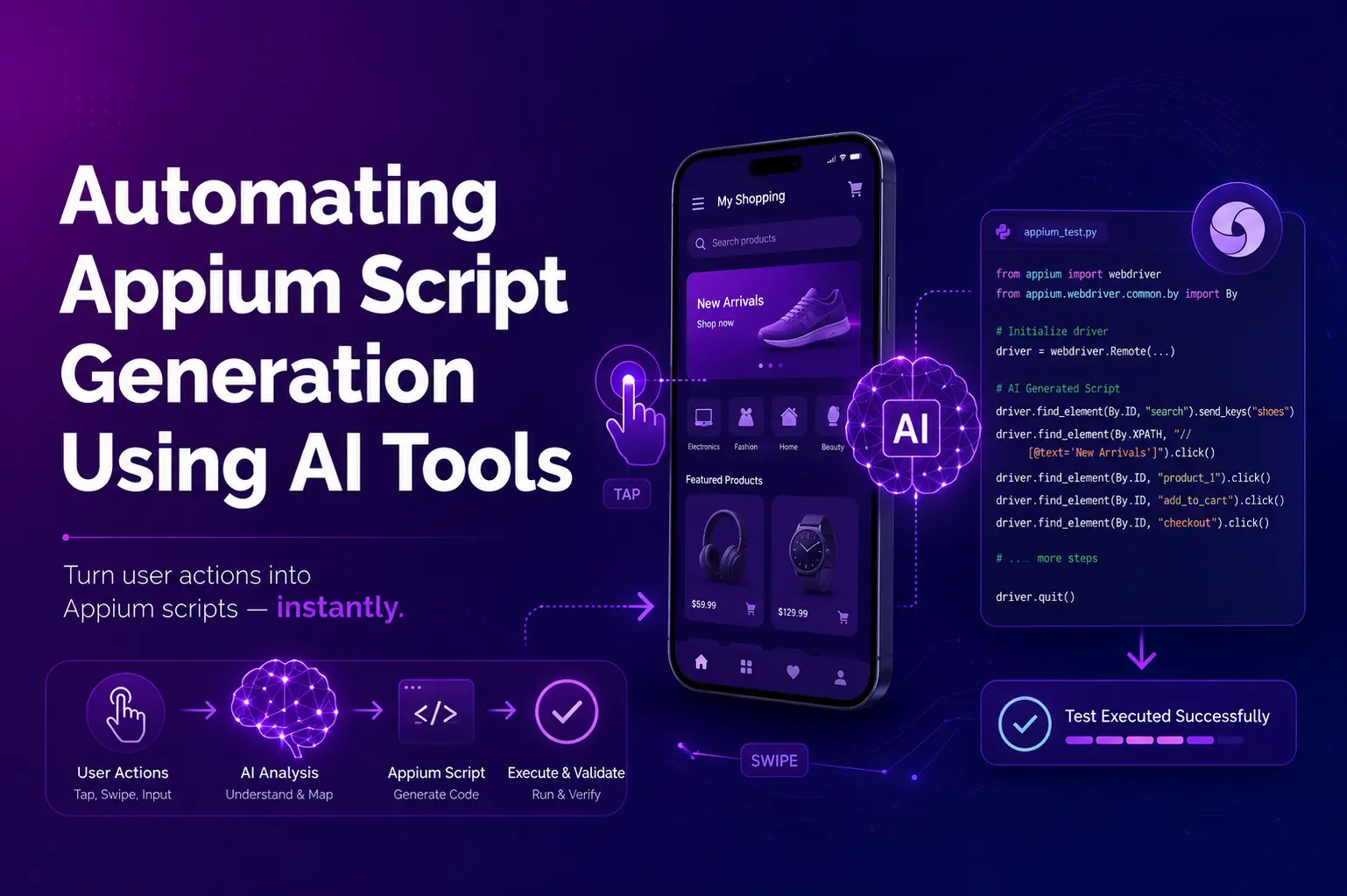
In modern mobile testing, speed and accuracy are no longer optional. Teams are expected to release updates quickly while maintaining consistent app performance across devices. This growing pressure has pushed many teams to rethink how they handle automation.
This is where Appium script generation with AI tools is making a real difference. Instead of writing and maintaining scripts line by line, testers can now rely on AI to generate stable and reusable automation scripts in a fraction of the time.
Platforms like Kobiton are already moving in this direction by combining real device testing with intelligent automation support. The result is a faster workflow without sacrificing reliability.
AI-driven testing is helping teams reduce repetitive effort, limit human errors, and maintain steady testing cycles even as applications grow more complex.
What is Appium Script Generation?
Appium script generation is the process of creating automation test scripts for mobile applications using Appium. Traditionally, this involves writing code manually in languages such as Java, Python, or JavaScript.
This manual approach works, but it often becomes time-consuming, especially when test coverage increases or when frequent UI changes require script updates.
With AI tools, the process becomes more efficient. AI observes user interactions, understands application behavior, and translates that into structured automation scripts. Instead of starting from scratch, testers can work with pre-generated scripts that are already aligned with real user flows.
This not only saves time but also reduces inconsistencies that typically occur with manual scripting.
Why Use AI for Appium Script Generation?
AI introduces practical improvements that directly impact testing speed and reliability.
Faster Test Creation
AI can generate test scripts within minutes. This allows teams to respond quickly to new features and shorter release cycles without falling behind on test coverage.
Reduced Manual Effort
Repetitive coding tasks are handled by AI. Testers can focus more on designing meaningful test scenarios instead of writing boilerplate scripts.
Improved Accuracy
AI tools identify patterns in user behavior and application responses. This leads to more consistent scripts with fewer logical errors.
Easier Maintenance
When UI elements change, AI can adjust scripts automatically in many cases. This reduces the time spent fixing broken tests after updates.
How AI Tools Automate Appium Script Generation
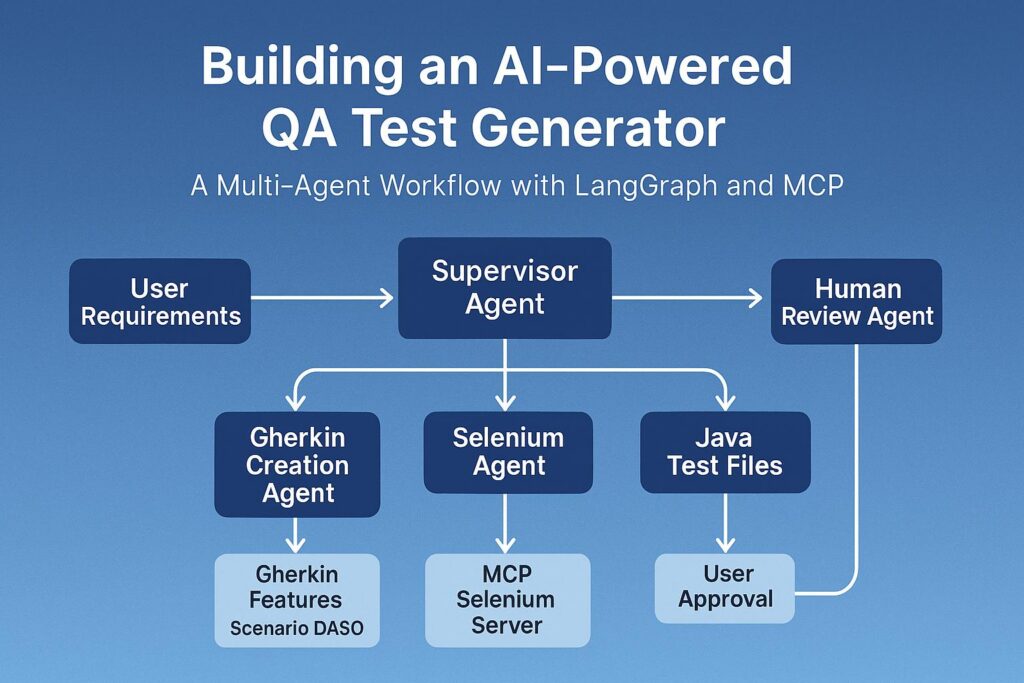
AI tools follow a logical process to turn user interactions into usable automation scripts.
Understanding User Actions
AI records real user interactions such as taps, swipes, and text input. These actions are mapped into structured test steps.
Analyzing Application Behavior
The system studies how the application responds under different conditions. This helps create test cases that reflect real usage rather than theoretical scenarios.
Generating Optimized Scripts
Using the collected data, AI produces clean and reusable Appium scripts. These scripts are often easier to scale across multiple test cases.
Self-Healing Capabilities
Some tools can detect when an element changes or becomes unavailable. Instead of breaking the test, the script adjusts automatically, which reduces maintenance overhead.
Solutions like Kobiton combine these capabilities with real device testing, making the generated scripts more reliable in real-world conditions.
Popular AI Approaches in Appium Script Generation
Several AI techniques are used to improve how scripts are generated and maintained:
- Machine Learning Models
Learn from previous test runs and improve script quality over time. - Natural Language Processing
Convert simple instructions into executable automation scripts, making it easier for non-developers to contribute. - Computer Vision
Identify UI elements visually instead of relying only on locators, which helps when element attributes change frequently.
These approaches make automation more adaptive and less dependent on rigid rules.
Challenges in AI-Based Appium Script Generation
While AI introduces clear advantages, there are still a few limitations to consider.
Data Dependency
AI performs best when it has access to clean and relevant data. Poor data can lead to inaccurate scripts.
Initial Setup
Implementing AI tools requires time, especially when integrating them with existing frameworks and workflows.
Tool Compatibility
Not every AI solution works seamlessly with all tech stacks. Teams need to choose tools that align with their current setup.
These challenges are manageable with proper planning and by selecting tools that fit the team’s needs.
Best Practices for Using AI in Appium Script Generation
To get consistent results, teams should follow a few practical guidelines:
- Define clear and realistic test scenarios before generating scripts
- Choose AI tools that align with your development and testing environment
- Review generated scripts regularly instead of relying on them blindly
- Combine AI-generated scripts with manual validation for better reliability
These steps help maintain a balance between automation speed and test quality.
The Future of Appium Script Generation
AI in test automation is evolving quickly. Script generation is becoming more accurate, more context-aware, and easier to maintain over time.
As these tools improve, testers will spend less time writing scripts and more time focusing on test strategy, edge cases, and overall product quality.
This shift does not replace testers. It allows them to work more efficiently and contribute at a higher level.
Conclusion
Automating Appium script generation with AI tools offers a practical way to handle modern testing demands. It reduces repetitive work, speeds up test creation, and produces more reliable automation.
Teams that adopt this approach are better positioned to keep up with fast development cycles while maintaining strong testing standards.
FAQs
What is Appium script generation?
Appium script generation is the process of creating automated test scripts for mobile applications using the Appium framework, either manually or with the help of AI-powered tools.
How does AI improve Appium script generation?
AI can observe user interactions, analyze application behavior, and automatically generate reusable Appium scripts, reducing manual coding effort and speeding up test creation.
What are the benefits of using AI for Appium automation?
Key benefits include faster script creation, reduced maintenance, improved accuracy, self-healing capabilities, and better support for large-scale test automation.
What AI technologies are used in Appium script generation?
Common AI approaches include machine learning, natural language processing (NLP), and computer vision to create, optimize, and maintain automation scripts.
What are the best practices for AI-generated Appium scripts?
Teams should define clear test scenarios, choose compatible AI tools, review generated scripts regularly, and combine AI-generated automation with manual validation for the best results.