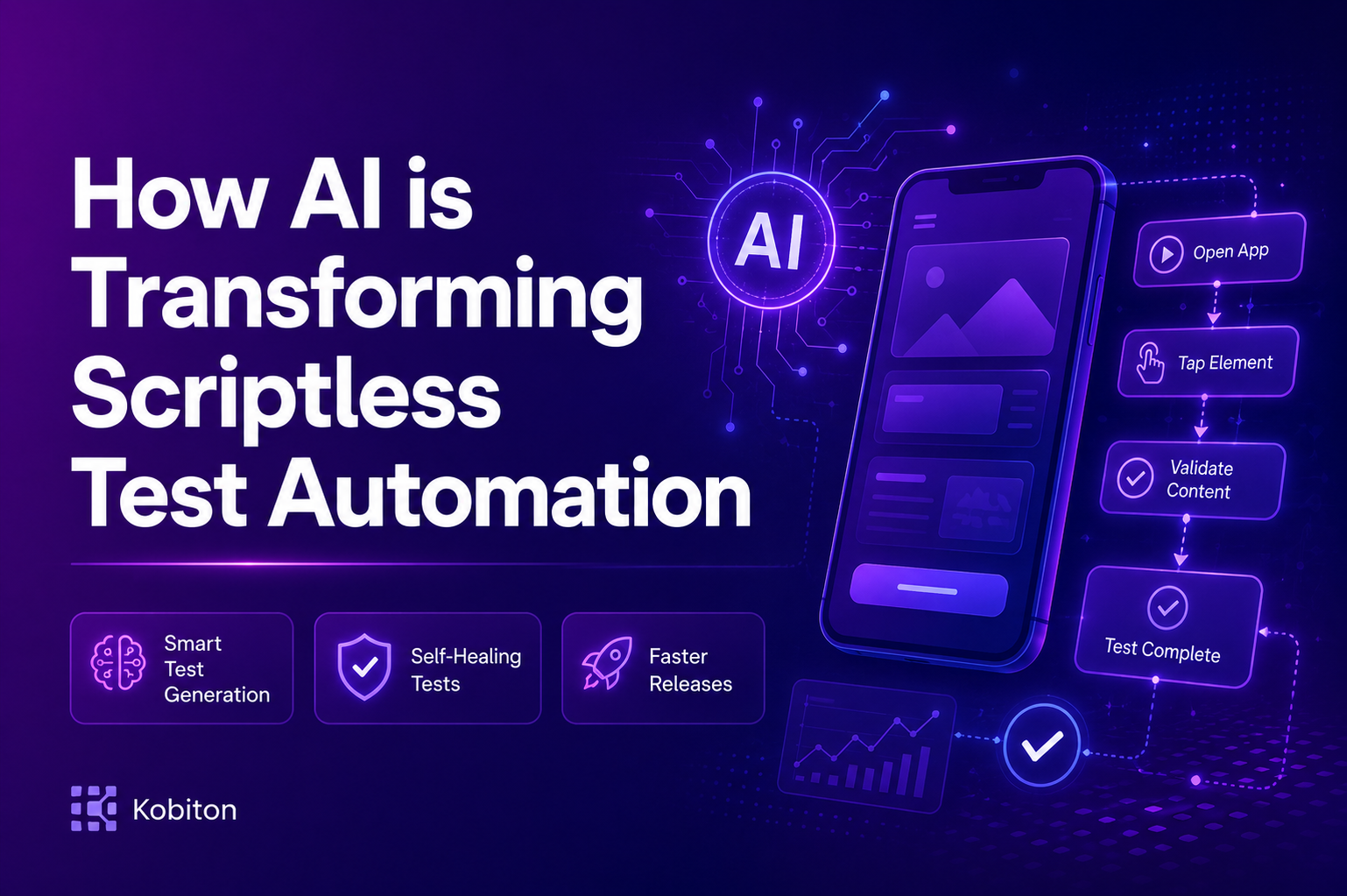
Software testing is changing quickly, and Scriptless Test Automation is becoming a key part of that shift. Traditional automation relies heavily on hand-written scripts. This approach often takes significant time, introduces human error, and becomes difficult to maintain as applications evolve.
Artificial Intelligence is changing how teams approach testing. Instead of relying on constant manual input, teams can now streamline workflows, reduce repetitive work, and speed up testing cycles. Platforms like Kobiton are already using AI to simplify mobile testing and improve reliability across devices.
What is Scriptless Test Automation?
Scriptless Test Automation allows testers to build automated tests without writing large amounts of code. Instead of scripting, users interact with visual interfaces, record actions, or use drag-and-drop tools to create test cases.
When AI is added to this process, it becomes much more powerful. The system can recognize patterns, detect inconsistencies, and refine test execution over time. This makes automation more accessible, even for non-technical team members, while still maintaining strong test coverage.
In practical terms, it shifts automation from a developer-only activity to a shared team capability.
How AI Improves Scriptless Test Automation
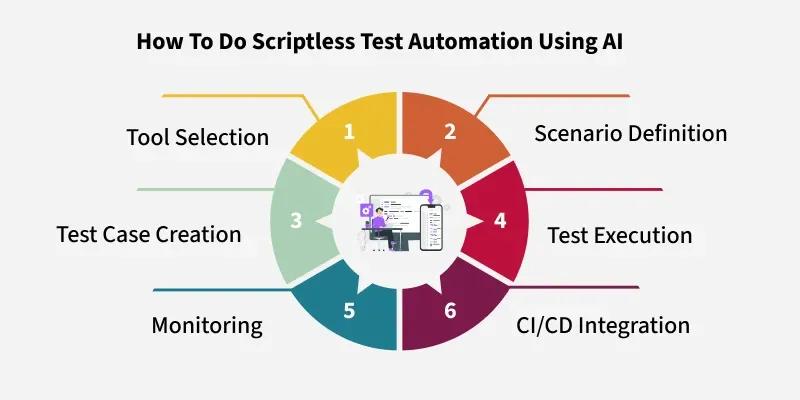
AI introduces several meaningful improvements that directly impact how testing is planned and executed.
Smart Test Case Generation
AI can study how an application behaves and automatically generate relevant test cases. Instead of relying on testers to think of every possible scenario, the system identifies gaps and builds tests around real usage patterns. This leads to broader coverage with less manual effort.
Self-Healing Tests
Maintaining automated tests is one of the biggest challenges in traditional automation. Even small UI changes can break scripts. AI-driven scriptless tools can detect these changes and adjust test steps automatically. This reduces maintenance work and keeps test suites stable over time.
Predictive Insights for Testing
AI can analyze past test results and identify areas that are more likely to fail. This allows teams to focus on high-risk areas first. It also helps in planning test cycles more effectively instead of treating all tests equally.
Faster and More Efficient Execution
AI can optimize how tests are executed by prioritizing important scenarios and running tests in parallel. This shortens feedback loops and supports faster release cycles. Teams can identify issues earlier and respond quickly.
Solutions like Kobiton apply these capabilities in real device environments, helping teams validate performance across different devices without adding complexity.
Benefits of Scriptless Test Automation with AI
Adding AI to scriptless automation brings clear, practical advantages:
- Lower Learning Barrier
Team members without programming experience can still contribute to automation efforts. - Higher Accuracy
AI reduces common human mistakes in both test creation and execution. - Cost Savings
Less time spent writing and maintaining scripts leads to lower operational costs. - Better Scalability
AI driven tools can handle complex applications and larger test environments without requiring proportional increases in effort.
Challenges and Considerations
While the benefits are clear, there are a few important factors to keep in mind:
- Setup and Integration
AI-based tools require proper setup, including integration with existing systems and workflows. - Dependence on Data Quality
AI relies on historical and real-time data. Poor data quality can affect results and predictions. - Skill Adjustment
Even without scripting, teams need to understand how to interpret AI-driven insights and make informed decisions based on them.
The Future of Scriptless Test Automation
AI is steadily reshaping how testing is done. As the technology continues to improve, we will see more advanced test generation, smarter maintenance, and increasingly autonomous testing workflows.
Testing will become less about writing scripts and more about guiding intelligent systems. Teams that adopt AI-driven scriptless automation early are in a stronger position to release reliable software faster while keeping operational effort under control.
Conclusion
AI is changing Scriptless Test Automation in a meaningful way. It simplifies how tests are created, reduces ongoing maintenance, and provides useful insights that help teams make better decisions.
Instead of spending time on repetitive tasks, teams can focus on improving product quality and user experience. For organizations aiming to speed up delivery and maintain high standards, AI-powered scriptless automation is quickly becoming a practical necessity rather than a future option.
FAQs
What is Scriptless Test Automation?
Scriptless Test Automation allows teams to create automated tests using visual workflows, record-and-playback features, or drag-and-drop tools instead of writing complex code.
How does AI improve Scriptless Test Automation?
AI improves scriptless testing by generating smarter test cases, enabling self-healing automation, identifying high-risk areas, and optimizing test execution.
What are self-healing tests in AI-driven automation?
Self-healing tests automatically adapt when UI elements or application structures change, reducing broken tests and lowering maintenance effort.
What are the benefits of AI-powered scriptless automation?
The main benefits include faster testing cycles, reduced manual work, lower learning barriers, improved accuracy, better scalability, and lower maintenance costs.
What challenges should teams consider with AI-powered scriptless testing?
Teams should consider setup complexity, integration requirements, data quality dependencies, and the need to understand AI-generated insights and recommendations.