Modern software development moves at a rapid pace. Teams are expected to release updates frequently while still maintaining high quality. Continuous Integration and Continuous Delivery pipelines have made this possible, but testing often slows things down. This is where AI augmented testing plays a valuable role, helping teams move faster without increasing manual effort.
Understanding AI in Modern Testing
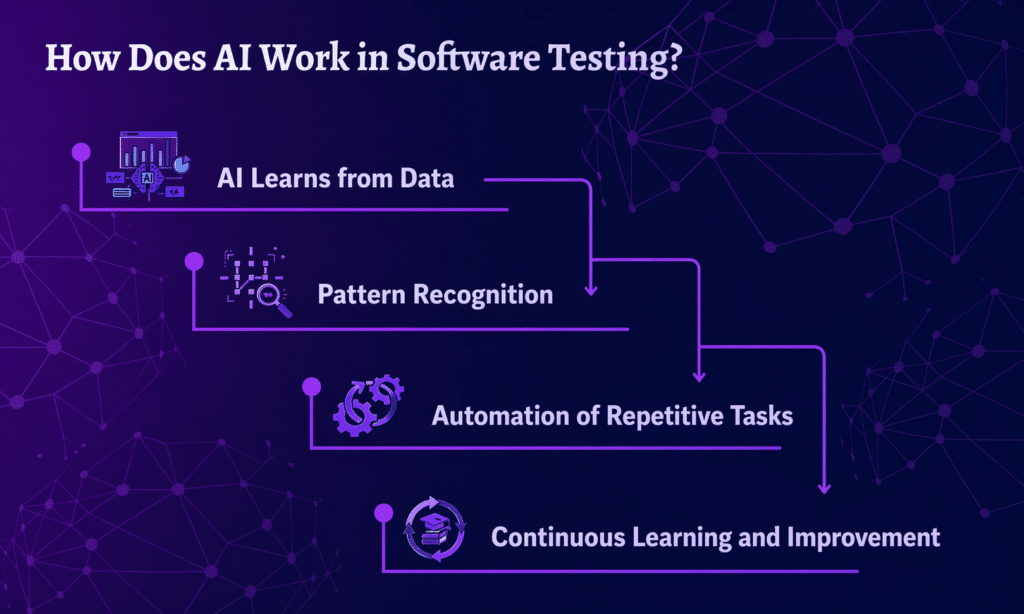
Artificial intelligence is reshaping how testing is done by introducing smarter automation and better decision-making. Instead of relying only on predefined scripts, testing systems can learn from historical data, identify patterns, and adjust their behavior over time. The use of AI in continuous integration testing helps teams improve efficiency by enabling smarter test execution and faster issue detection.
In CI/CD environments, this makes it easier to handle large volumes of test cases without overwhelming QA teams. AI testing integration with CI/CD reduces repetitive tasks and delivers faster feedback, which is essential when releases happen frequently. Platforms like Kobiton already apply this approach to improve mobile testing by combining automation with intelligent insights.
How It Improves CI/CD Pipelines
Traditional automation within CI/CD pipelines often struggles with flaky tests, frequent maintenance, and limited flexibility. AI augmented testing addresses these issues by making test execution more adaptive.
For example, test scripts can automatically adjust to minor UI changes, reducing the need for constant updates. AI can also prioritize test execution based on risk levels and past failures, allowing teams to validate critical areas of the application first.
Another key improvement is the ability to generate predictive insights. By analyzing previous test runs, AI can highlight areas that are more likely to break. This gives developers a chance to fix potential issues early, before they reach production.
Key Benefits for Faster Releases
One of the biggest advantages of AI in testing is speed. Automated analysis and intelligent execution significantly reduce the time needed to complete test cycles, allowing teams to release updates more quickly.
Accuracy improves as well. AI-driven systems can identify unusual behavior and subtle defects that might be missed during manual testing. This leads to more stable and reliable applications.
Test coverage also becomes stronger. AI can create additional test scenarios based on real user interactions, which helps validate how the application performs in real-world conditions. Solutions like Kobiton support this by providing real device testing combined with intelligent automation, improving both coverage and reliability.
Another important benefit is reduced maintenance. Self-healing scripts can adapt when changes occur, saving time for QA teams and allowing them to focus on higher-priority work such as test strategy and quality improvements.
Challenges to Keep in Mind
Despite its advantages, adopting AI augmented testing comes with a few challenges. It requires proper setup, access to high-quality data, and smooth integration with existing tools. If the data is incomplete or inconsistent, the results may not be reliable.
Teams also need time to adjust to this new approach. Learning how to use AI-driven tools effectively is important for getting meaningful results. A gradual rollout combined with training can make this transition easier.
Cost can also be a concern at the beginning. While the initial investment may be higher, the long-term gains in efficiency and reduced manual effort often make it worthwhile.
Best Practices for Implementation
Start by identifying areas in your CI/CD pipeline where intelligent testing can deliver quick improvements, such as regression testing or identifying high-risk components.
Make sure your data is clean and well-structured, since this directly impacts how accurately AI performs. It is also important to combine automation with human oversight. Experienced QA input helps maintain confidence in the results and prevents false positives from going unnoticed.
Choose tools that fit well with your existing workflow to avoid unnecessary disruption. Regular monitoring and small adjustments over time will help improve performance and reliability.
Conclusion
AI augmented testing is helping teams make their CI/CD pipelines faster and more dependable. By improving test execution, reducing repetitive work, and providing meaningful insights, it supports quicker and more stable releases. As more teams adopt this approach, it will continue to play a key role in modern software development.