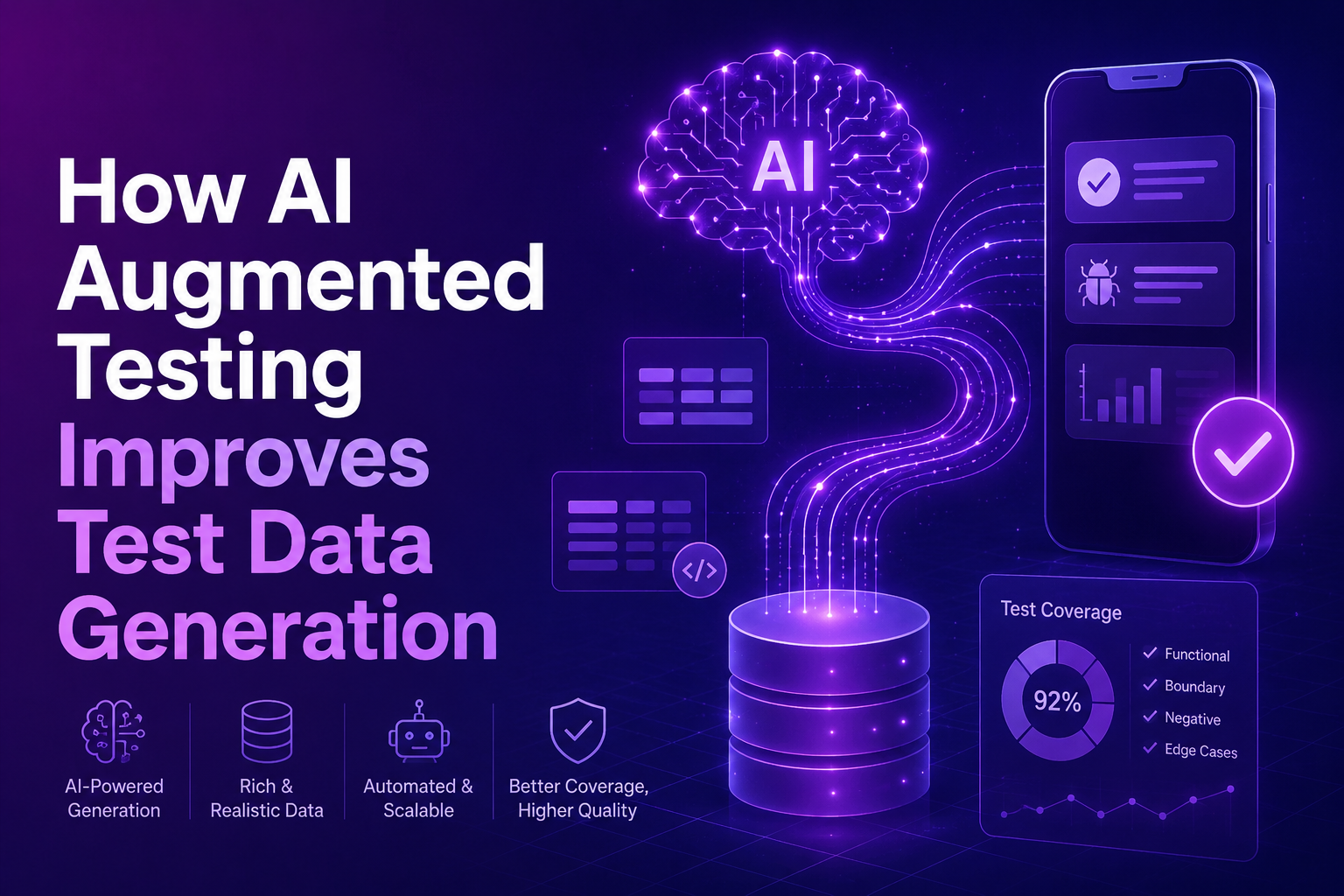
In modern software development, speed and quality are closely connected. Teams are expected to release faster without compromising reliability, which makes testing more demanding than ever. One of the most persistent challenges is generating accurate and diverse test data.
This is where AI Augmented Testing makes a meaningful difference. By introducing artificial intelligence into the testing workflow, teams can improve how test data is created, managed, and applied across different scenarios.
What is AI Augmented Testing?
AI Augmented Testing involves using artificial intelligence and machine learning to support and improve software testing processes. Instead of relying entirely on manual effort, teams can use AI to handle repetitive work, reduce human error, and make more informed testing decisions.
When it comes to test data generation, AI can study patterns, learn from real usage, and produce datasets that closely reflect how users interact with an application. Platforms like Kobiton apply similar intelligence to improve testing accuracy and efficiency across real device environments.
Why Test Data Generation Matters
Test data sits at the core of every testing effort. If the data is incomplete or unrealistic, even well-written test cases can fail to catch critical issues. This often leads to bugs slipping into production, unstable releases, and poor user experiences.
Traditional approaches to test data generation are usually manual and limited. They often rely on static datasets that do not reflect real-world usage, which reduces the effectiveness of testing.
With AI Augmented Testing, teams can generate large volumes of relevant and high-quality data in a fraction of the time. This directly improves test reliability and confidence in results.
How AI Augmented Testing Improves Test Data Generation
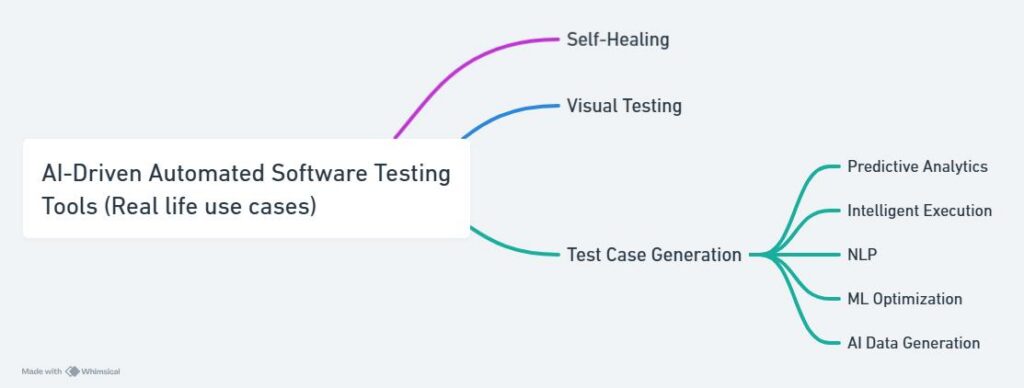
1. Automated Data Creation
AI removes much of the manual effort involved in building test datasets. Instead of spending hours preparing data, teams can rely on AI models to generate it automatically.
This not only saves time but also reduces inconsistencies. AI can produce both structured data, such as form inputs and database records, and unstructured data, such as user interactions or text inputs, based on the application’s needs.
2. Realistic Data Simulation
One of the strongest advantages of AI is its ability to replicate real-world behavior. By analyzing production patterns, AI can generate data that closely mirrors how users actually interact with the system.
This allows teams to test real scenarios instead of assumptions. Complex user journeys, unexpected inputs, and edge cases become easier to simulate, leading to more reliable outcomes.
Tools and environments connected with platforms like Kobiton can further support this by validating how these scenarios perform across real devices.
3. Improved Test Coverage
Strong test coverage depends on data variety. If your data is limited, your testing will be limited as well.
AI helps identify gaps in existing datasets and generates new variations to fill them. This leads to broader scenario coverage, which means fewer blind spots during testing and a better chance of catching issues early.
4. Data Privacy and Compliance
Using real production data for testing often raises privacy and compliance concerns. Regulations require teams to handle sensitive data carefully, which can restrict testing options.
AI solves this by generating synthetic data that behaves like real data without exposing personal or sensitive information. This allows teams to maintain compliance while still working with realistic datasets.
5. Continuous Data Improvement
AI systems improve over time. As more tests are executed, the system learns what works and what does not.
This ongoing learning process leads to better data generation with each cycle. Over time, test datasets become more refined, more accurate, and more aligned with real-world usage.
Key Benefits of AI-Augmented Testing for Test Data Generation
- Faster creation of test datasets
- Reduced dependency on manual input
- More accurate and realistic data
- Broader test coverage
- Better alignment with data privacy requirements
These benefits allow teams to release stable applications while keeping up with tight development timelines.
Challenges to Consider
While AI Augmented Testing offers clear advantages, there are a few practical considerations:
- Initial setup and integration may require time and planning
- AI models depend on quality input data to perform well
- Teams may need time to adapt to new workflows
With proper planning and the right tools, these challenges can be handled without disrupting the overall testing process.
Conclusion
Test data generation plays a central role in software testing, and traditional methods often struggle to keep up with modern demands.
AI Augmented Testing changes the approach by making data generation faster, more accurate, and easier to scale. It allows teams to test more realistic scenarios, reduce risk, and improve overall product quality.
As applications continue to grow in complexity, AI-driven testing methods will become a standard part of how teams build and release reliable software.
FAQs
What is AI Augmented Testing?
AI Augmented Testing uses artificial intelligence and machine learning to improve software testing processes, reduce manual effort, and support smarter testing decisions.
How does AI improve test data generation?
AI automates data creation, simulates realistic user behavior, generates data variations, and continuously improves datasets based on testing patterns.
Why is realistic test data important in software testing?
Realistic test data helps teams validate real-world scenarios, improve test accuracy, increase coverage, and reduce the risk of defects reaching production.
Can AI-generated test data support privacy compliance?
Yes. AI can create synthetic test data that behaves like real data without exposing sensitive or personal information, helping teams meet compliance requirements.