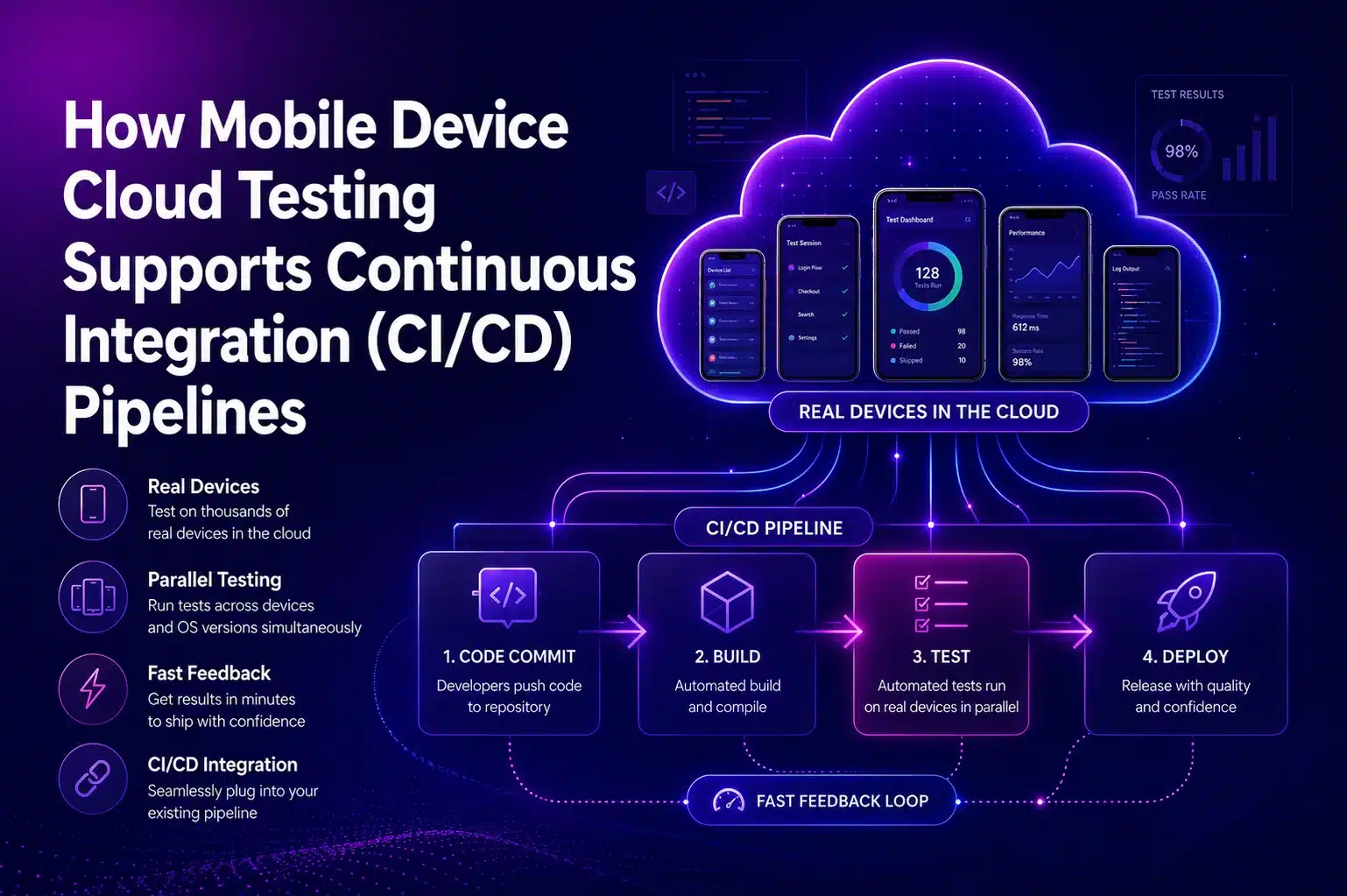
In modern app development, speed alone is not enough. Every update must also meet user expectations across different devices and environments. Teams are now expected to release frequently while maintaining stable performance. This is where mobile device cloud testing becomes a practical part of the workflow.
It allows development and QA teams to test applications on real devices hosted in the cloud, making it much easier to plug testing directly into CI/CD pipelines without slowing things down.
What is Mobile Device Cloud Testing?
Mobile device cloud testing is the process of testing mobile applications using a cloud platform that provides access to real smartphones, tablets, and browsers. Instead of building and maintaining a physical device lab, teams can run tests remotely on a wide range of devices.
This setup removes the overhead of managing hardware while giving teams access to up-to-date devices, operating systems, and configurations. It also improves test coverage, since teams can validate their app across multiple screen sizes, OS versions, and real user conditions without physical limitations.
Platforms like Kobiton make this process more practical by providing instant access to real devices along with tools that support both manual and automated testing.
The Role of CI/CD Pipelines in Modern Development
CI/CD pipelines automate how code moves from development to production. Every code change triggers a sequence of steps such as building the app, running tests, and preparing it for deployment.
This system helps teams release faster, but it also increases the risk of pushing issues if testing is not properly integrated. A pipeline without strong testing is simply moving problems forward more quickly.
By bringing mobile device cloud testing into the pipeline, teams can validate every change before it reaches users, which keeps both speed and quality aligned.
How Mobile Device Cloud Testing Supports CI/CD Pipelines
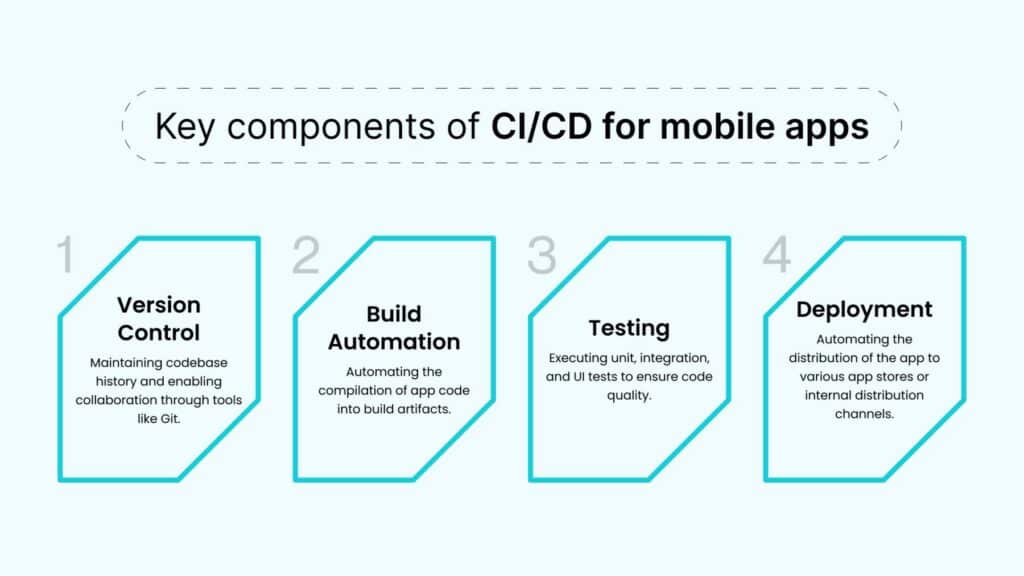
1. Automated Testing Across Multiple Devices
One of the biggest advantages is the ability to run automated tests on many devices at the same time. Instead of testing sequentially, teams can validate builds across different environments in parallel.
This means every code commit is checked against real-world scenarios, helping catch issues early before they grow into larger problems.
2. Faster Feedback for Developers
In a CI/CD workflow, timing matters. Developers need quick feedback to fix issues while the context is still fresh.
Mobile device cloud testing provides near-instant results after each build. Instead of waiting for manual QA cycles, developers can identify bugs, fix them quickly, and keep the pipeline moving without unnecessary delays.
3. Real Device Validation
Emulators are useful, but they do not fully replicate how apps behave on actual devices. Performance, touch response, and hardware differences can all impact the user experience.
Testing on real devices in the cloud helps teams identify UI inconsistencies, performance bottlenecks, and device-specific bugs that might otherwise go unnoticed. This leads to more reliable releases and fewer surprises after deployment.
Solutions like Kobiton allow teams to access real devices instantly, making this level of testing practical even for fast-moving teams.
4. Smooth Integration with CI/CD Tools
Modern cloud testing platforms are designed to work with common CI/CD tools such as Jenkins, GitHub Actions, and GitLab CI.
Once integrated, tests can be triggered automatically at different stages of the pipeline. This keeps the process consistent and reduces manual effort, allowing teams to focus more on improving the product rather than managing workflows.
5. Broader Test Coverage Without Hardware Limits
Users interact with apps on a wide variety of devices, operating systems, and network conditions. Replicating all of this with physical devices is expensive and difficult to maintain.
Mobile device cloud testing removes that limitation by giving access to a large pool of devices on demand. Teams can test more scenarios without increasing infrastructure, which leads to better performance across different user environments.
Key Benefits of Mobile Device Cloud Testing in CI/CD
- Faster release cycles through automated testing
- Lower infrastructure and maintenance effort
- Better collaboration between development and QA teams
- Scalable testing across many devices and environments
- Improved app stability and user experience
When testing is built directly into the CI/CD pipeline, teams can move quickly without losing control over quality.
Best Practices for Implementation
To get consistent results from mobile device cloud testing, teams should focus on a few practical steps:
- Prioritize high-impact test cases for automation
- Run tests in parallel to reduce execution time
- Integrate testing early in the pipeline, not just before release
- Regularly review test results and refine test coverage
Following these practices helps keep the pipeline stable while making testing more efficient over time.
Conclusion
Relying only on manual testing is no longer practical in fast-moving development environments. Mobile device cloud testing allows teams to test at scale, validate real-world behavior, and keep up with frequent releases without adding infrastructure overhead.
When integrated into CI/CD pipelines, it supports consistent releases, better quality control, and a smoother user experience. For teams looking to keep up with modern development demands, this approach is a logical step forward.
FAQs
What is mobile device cloud testing?
Mobile device cloud testing allows teams to test apps on real smartphones, tablets, and browsers hosted in the cloud instead of maintaining physical device labs.
Why is mobile device cloud testing important for CI/CD pipelines?
It helps teams automate testing, validate code changes quickly, improve release quality, and maintain faster development cycles without slowing down deployments.
How does cloud testing improve test coverage?
Cloud testing provides access to a large range of devices, operating systems, screen sizes, and environments, allowing teams to test more real-world scenarios.
Why should teams use real devices instead of only emulators?
Real devices help uncover performance issues, touch response problems, UI inconsistencies, and device-specific bugs that emulators may not accurately reproduce.
Which CI/CD tools can integrate with mobile device cloud testing platforms?
Common CI/CD tools include Jenkins, GitHub Actions, and GitLab CI, which can automatically trigger tests at different stages of the pipeline.